

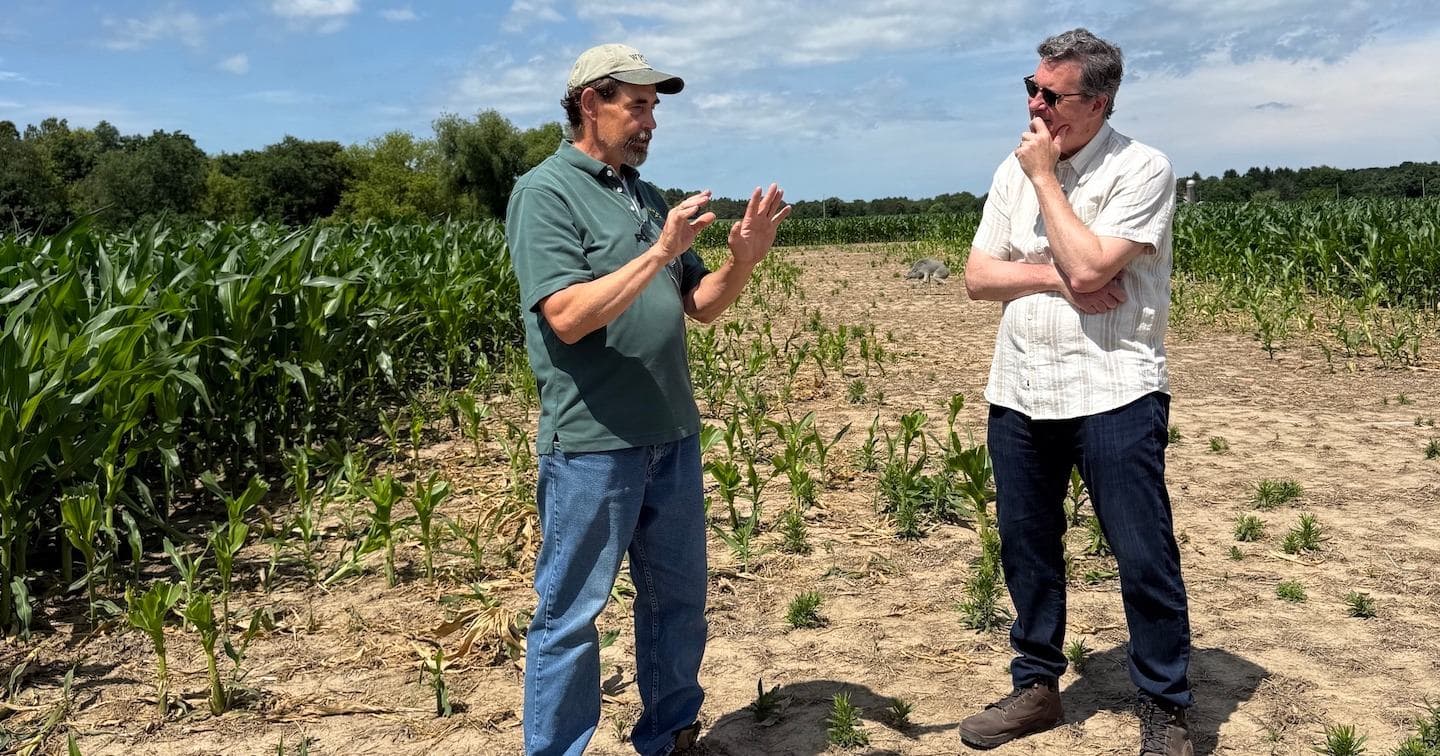


As Wisconsinites prepare for the high-stakes August primaries, sustainable farmers are highlighting urgent rural and agricultural issues.
They say federal policies have contributed to an economic downturn, but East Troy farmer and independent research agronomist Jim Stute said he believes state programs can help strengthen farms.
Stute said he supports increased investment in conservation efforts, such as producer-led watershed groups, which can multiply the impact of state funding. Stute noted the state program supporting these groups incentivizes practices that benefit farms, natural resources and the local economy.
“This program is wildly successful, and we have a lot of groups, and the funding level has remained constant,” he explained. “So we have more groups chasing the same amount of money, and the result is less money to each group. So we really need to see an increase in funding.”
Stute said farmers are under pressure to conserve farmland while maintaining productivity to meet demand. And as growers are currently facing a drought, he said it’s never been more important to ensure soil can withstand the assault from severe weather.
The upfront costs and sometimes lengthy return on investment can deter farmers from adopting sustainable practices. According to Stute, making conservation practices financially viable through incentives like cost-share programs and crop insurance rebates is the most effective way to encourage it.
“If it becomes a business decision to adopt conservation, and we’re going to make money doing it, farmers are going to do it, and that’s what we need to focus on,” he said.
Stute also stressed how high farmland prices make it difficult for new farmers to enter the industry, while many retiring farmers must sell land to fund retirement. He said revamping Wisconsin’s largely unfunded Purchase of Agricultural Conservation Easement Program could help preservation efforts.
“What that does is pays the farmer, in effect, the development value of the farmland. It’s in a conservation easement, and it can’t ever be developed, but the farmer’s able to get some of their investment out of the farmland,” Stute said.
In partnership with the Michael Fields Agricultural Institute, Stute and other local growers hosted farm tours this month for gubernatorial candidates to help them better understand agricultural perspectives.
With early voting now underway in Wisconsin, farmers are also hoping the talks will help voters understand where candidates stand on rural issues. People can learn about these one-on-one candidate conversations at MichaelFields.org.


