

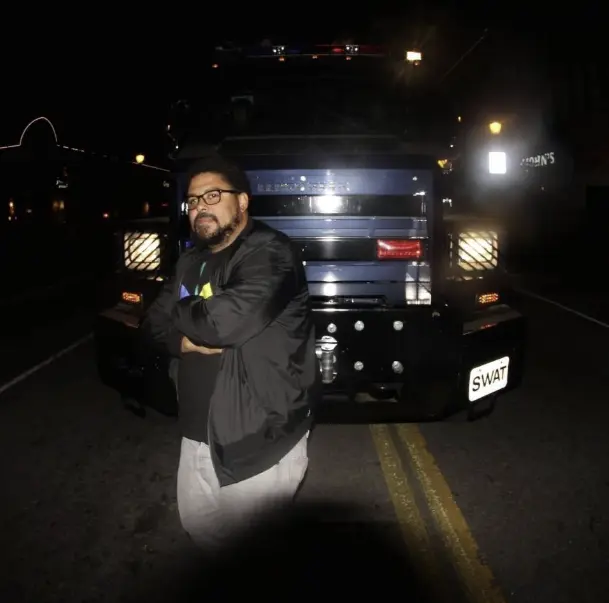
Dr. Robert "Biko" Baker
Source: Submitted photo

This past week, I focused my classroom teaching on the Ferguson uprising. More than twelve years after the killing of Michael Brown Jr. and the rebellion that followed, one of the most important moments in contemporary Black political history is already fading from our collective memory.
For many of my Gen Z students, who were children when Ferguson erupted in 2014, the movement exists largely outside their lived memory. While George Floyd and the countless other victims of police violence remain familiar, Ferguson and the emergence of the Movement for Black Lives have become increasingly distant.
Perhaps the most significant Black freedom struggle since the Civil Rights Movement has been compartmentalized, sanitized, and pushed to the margins of our historical imagination.
At the time, I knew this would happen.
I warned movement leaders and colleagues that their courageous attempts to reimagine community, public safety, and political power would eventually be rewritten, whitewashed, or forgotten.
As a historian of Black freedom movements, I understood this pattern. From Reconstruction through the Civil Rights and Black Power movements, moments of Black political advancement have repeatedly been met with institutional resistance, co-optation, and backlash. Those closest to the struggle, the people who take the greatest risks, are often replaced in the historical record by figures more acceptable to political and economic elites.
Ferguson seemed destined to follow a familiar pattern.
What I didn’t anticipate was how effectively the same hierarchies we were fighting against would reproduce themselves within our own movements.
When I was a young organizer, my colleagues and I had a term for a particular kind of activist: the celebrity organizer.
These were people often absent when the difficult, unglamorous work of organizing was taking place but somehow always present when the cameras and microphones were turned on.
I came of age in the labor and social justice movements of the early 2000s, particularly those rooted in Los Angeles and Southern California. My political education taught me that organizing begins at the bottom, with grassroots leaders who emerge from their communities and eventually become champions for the people they represent.
But Ferguson exposed the contradictions between that philosophy and the realities of modern movement politics.
Outsiders, including myself, frequently became the voices of younger, braver, and more courageous activists who were putting their lives on the line every day.
I entered Ferguson loud, brash, egotistical, and, if I’m being truthful, patriarchal.
I believed my experience, relationships, and ability to command attention could help advance the movement. And perhaps, in some ways, they did.
But after more than a year working alongside leaders on the ground, my perspective changed.
I began to understand that the trauma, anger, and desperation produced by an aggressive police state couldn’t be resolved by celebrity activists, middle-class leadership, or people with the loudest microphones.
The real work was being done by young men, women, and elders whose names most of us have already forgotten.
They were the people who stayed after the cameras left. The people who understood the daily consequences of poverty, policing, and political abandonment. The people who weren’t simply fighting for recognition but for the survival and transformation of their communities.
I thought America, and particularly Black America, would eventually recognize the difference.
The poverty and pain of Ferguson were so stark, so impossible to ignore, that I believed the class divisions within Black political life would finally have to be confronted.
I thought the movement would force us to reconsider who gets to speak for poor and working-class communities, who benefits from their struggles, and who ultimately controls the resources generated in their names.
I was wrong.
Instead, many of the same dynamics that existed before Ferguson became more entrenched. Social media, nonprofit funding, and institutional recognition created new opportunities for organizers and activists to build careers and public identities around movements born from the suffering of poor people.
There’s nothing inherently wrong with professional organizing. Movements need paid staff, strong institutions, and people who can dedicate their lives to political work.
The problem emerges when the professional advancement of organizers becomes disconnected from the political and economic advancement of the communities they claim to represent.
When visibility becomes a substitute for accountability. When access to foundations and political elites matters more than relationships with working-class people. When the language of liberation becomes a career path rather than a commitment to changing material conditions.
This is the contradiction I underestimated.
Ferguson helped transform the national conversation about policing, race, and state violence. Its language entered universities, corporations, nonprofit organizations, and electoral politics.
But cultural recognition is not the same as political power.
The institutions that distribute money, legitimacy, and influence often remained disconnected from the communities whose suffering gave the movement its urgency.
In many ways, the movement changed who could speak without fundamentally changing who held power.
And while some individuals built platforms, careers, and organizations, many of the communities that gave birth to the movement continued struggling with the same fundamental problems.
But perhaps something is changing.
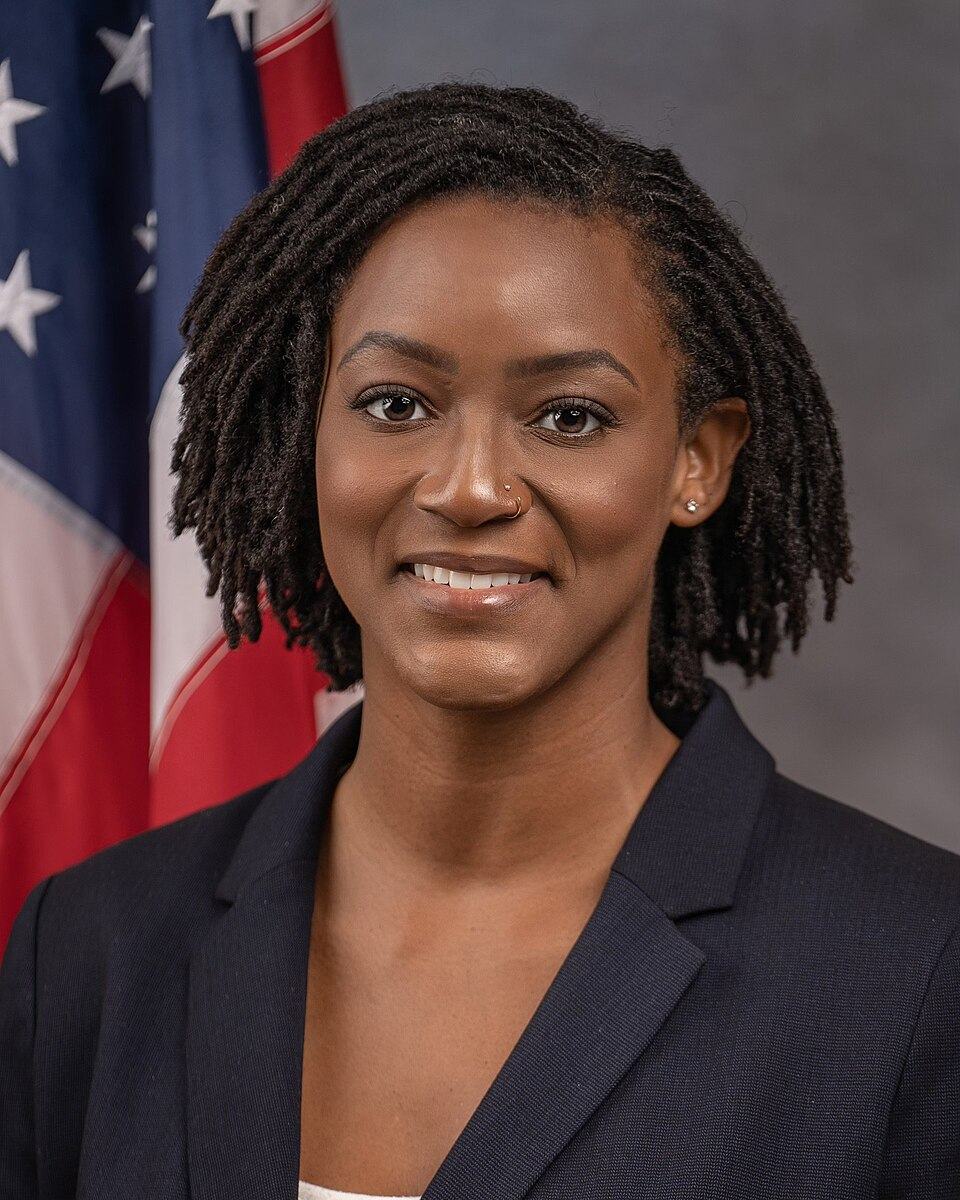
Recent elections have offered signs that the relationship between grassroots organizing and political leadership deserves another look.
Milwaukee County Executive David Crowley represents a political career rooted in local public service. Former Florida State Representative Angie Nixon offers another example, emerging from grassroots organizing to challenge established political structures.
Nixon’s recent U.S. Senate campaign is particularly instructive. Despite being dramatically outspent, she won her Democratic primary before losing the general election.
But losing an election doesn’t necessarily mean losing political ground.
Nixon’s continued commitment to building grassroots political infrastructure offers a reminder that movements cannot be measured by election results alone. Sometimes political advancement comes through developing new leaders, building organizations, and creating relationships that survive long after the votes are counted.
Perhaps people are growing tired of talking heads, political pundits, and surface-level heroes.
Perhaps the era of building comfortable middle-class lifestyles from the struggles of poor and working-class communities is facing a long-overdue reckoning.
Or perhaps the economic pressures of inflation, artificial intelligence, and an increasingly uncertain labor market are forcing us to recognize something Ferguson should have taught us more than a decade ago.
Class matters. Labor matters. And the people closest to the problems must have the power to shape the solutions.
The lesson I take from Ferguson isn’t that the movement failed. Far from it. Ferguson transformed American political culture and helped inspire a generation of activists.
The lesson is that movements can change the conversation without fundamentally changing who controls the institutions, resources, and decisions that shape people’s lives.
Ferguson taught me that the struggle over power doesn’t simply take place between movements and the institutions they challenge. It also takes place within movements themselves.
I entered Ferguson believing that the right voices, amplified through the right platforms, could help transform society.
I left understanding that the most important voices were often the ones nobody was listening to.
Twelve years later, I’m still wrestling with that contradiction.
Because the future of our movements won’t be determined by who has the biggest platform, the most followers, or the greatest access to institutional power.
It will be determined by whether we can build movements in which the people closest to the struggle are not simply represented, but actually hold power.

Robert "Biko" Baker III, Ph.D. (UCLA, History), works at the intersection of culture, tech, and public engagement. A former contributor to The Source and Vibe, he later served as national executive director of the League of Young Voters, leading high-profile civic campaigns and collaborations, including the launch of No Guns Allowed with Snoop Dogg and Ron Conway. He has advised and served on boards for organizations including CIRCLE at Tufts and Sankofa.org, and was named to the NAACP’s “40 Under 40.” Biko is currently Operations Manager for WNOV 860AM/106.5FM and the Milwaukee Courier Newspaper.