

Students want hands-on training in the work of democracy. Colleges are answering
Colleges add public policy courses and majors designed to give students practical experience in solving issues of local governance
This story was produced by The Hechinger Report, a nonprofit, nonpartisan news outlet focused on education.

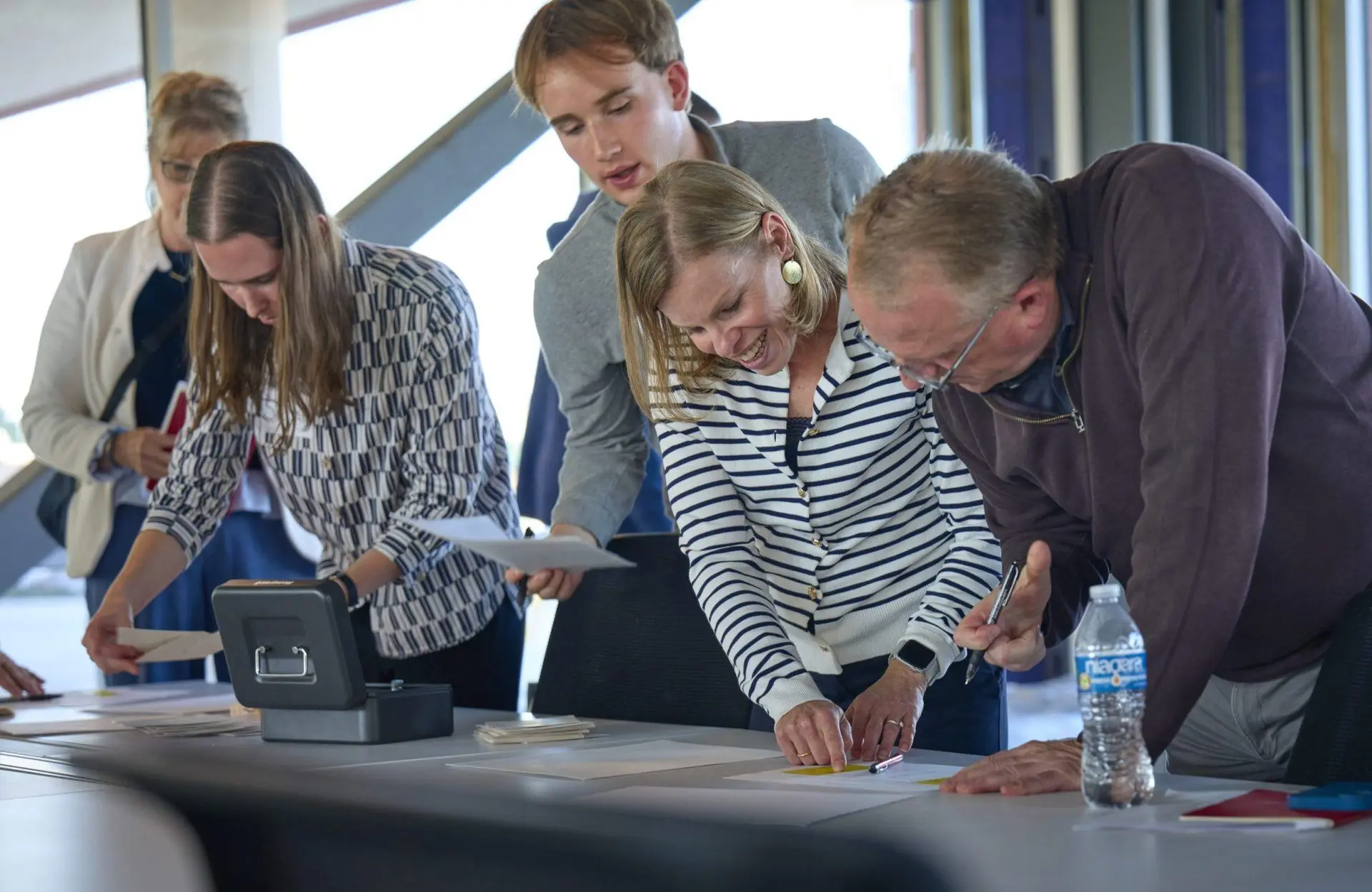
KENOSHA, Wis. — Andrew Staff knew the data. The sophomore at the University of Wisconsin-Madison had helped create an information packet for the 26 residents of Kenosha County, each randomly selected and paid $100 to spend a Saturday confronting the local housing crunch. The key question: Could factory-built dwellings help?
But by the end of the six-hour session, during which residents raised and wrestled with one another’s concerns, Staff’s head was spinning. Affordability was just one factor, he noted, ticking off others such as proximity to parks and transportation and the fact that not every resident actually wants their own house.
Days later, Staff switched his major from political science to public policy, newly offered this fall at the University of Wisconsin-Madison’s La Follette School of Public Affairs, which had helped organize the Kenosha event in part to give students real-world experience.
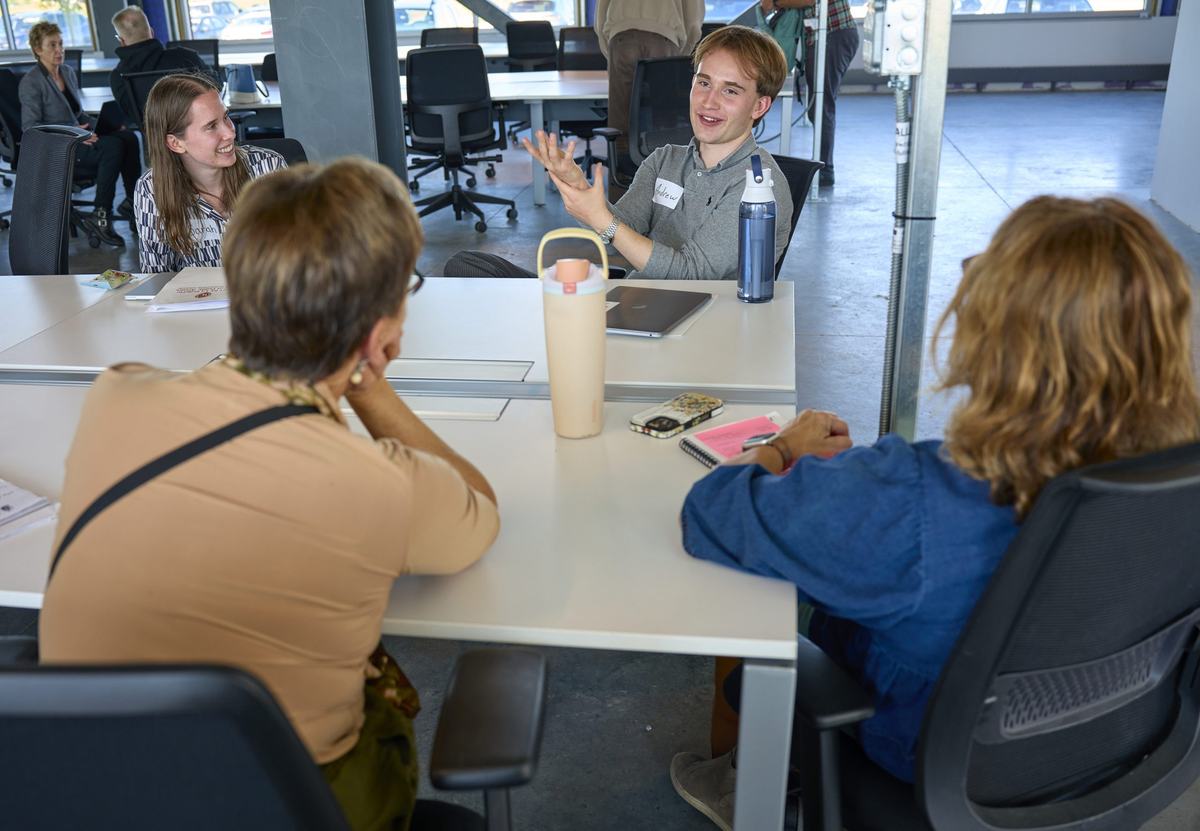
“I don’t just want to think about political theory,” said Staff. “I want to get out there and do things.”
It’s no secret that Gen Z is unhappy with the direction of the country, distrustful of government and concerned about political polarization. But there’s also evidence they want to do something about it: Seventy-nine percent of those polled in April 2026 felt they could make a difference by voting and participating in the democratic process; 38 percent want to run for state or local office, up from 34 percent in 2025. In November’s midterm elections, voter turnout among people ages 18 to 29 was the second-highest in decades, according to one estimate.
Colleges are answering with courses, certificates — and majors — in public policy, which tends to be more hands-on and skills-based than the political science major. Columbia University in July announced a new major in global affairs and public policy, and institutions including the University of Pittsburgh, Kentucky State, the University of Texas at Austin, Georgetown and the University of Virginia have also recently added undergraduate majors in public policy.
Students dig into ho-hum matters like town budgets, but also spicy challenges animating municipal meetings nowadays, like controversies over data centers, use of Flock cameras and — yes — affordable housing.
The focus on experiential learning appeals to today’s students, who tend to be “anxious about whether what they’re studying is going to get them a job,” said Peter Levine, a Tufts University political scientist and philosopher who helped to found the Center for Information & Research on Civic Learning and Engagement (CIRCLE). “And public policy seems pretty concrete, like you could work in state government.”
Many young people right now are “very alienated from national politics,” Levine added. That’s “going to turn some of them, I think very wisely, to state and local politics,” which, he noted, “they may have been overlooking.”
Related: Colleges rebrand humanities majors as job-friendly
Many of the newly created majors are expanding fast. Jodi Sandfort, dean of the Evans School of Public Policy & Governance at the University of Washington, whose public service and policy major started last year, said eight students graduated with it last spring — and 118 applied to the major this fall. Sandfort credits the interest to an erosion of teaching about knotty government issues in K-12 schools, and students arriving on campus and “trying to make sense of current events.”
Sandfort said students in the new major recently gathered data, got resident input and made recommendations to ease a controversy over traffic cameras in a local community: “They saw that their work makes a real difference in solving a problem that can create frustration among citizens.”
Susan Webb Yackee, director of the La Follette School at Wisconsin-Madison, said the new major came after enrollment in a public policy certificate program, which started in 2019, rose from 53 to 649 in six years. Students, she said, “are asking for a more applied learning experience.” So far, 42 have enrolled in the new major; university data project it to reach 417 in five years.
The new major requires a course, Advancing Public Policy in a Divided America, that teaches students to learn how to disagree — productively.
On a recent Tuesday in a packed classroom in Ingraham Hall, 29 students in the course were grappling with a question to work that muscle: “What makes a political view ‘reasonable’ or ‘unreasonable’?” It was no softball. Students broke into groups and associate professor Amber Wichowsky set a timer.
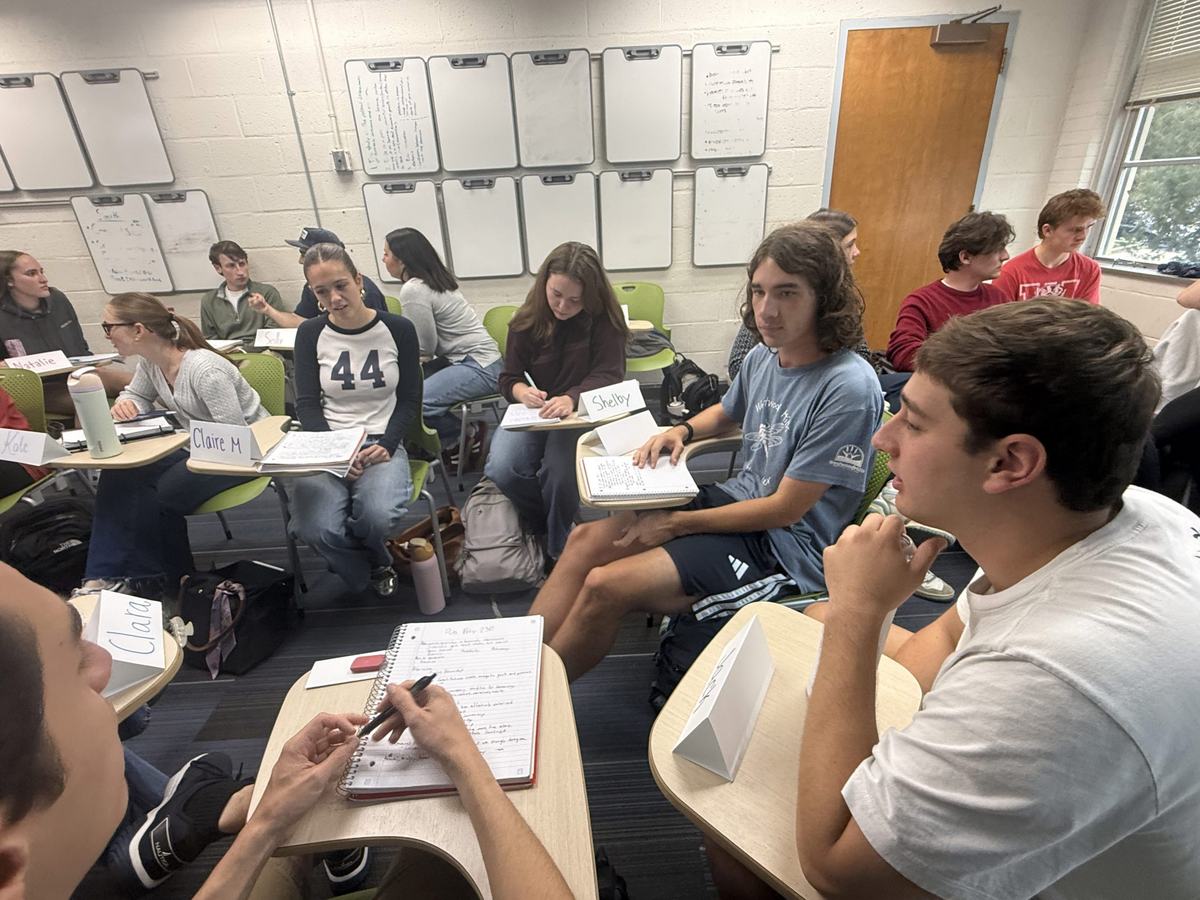
When it came time to share, responses were all over the map. One group decided that most everything was reasonable. “If you just reject somebody’s unreasonable view, they’re not going to have any way to change it to where it might become reasonable to you,” one student explained.
Another group wanted facts but worried about trusting their source. Yet another felt people should have the freedom to speak their minds and people should be open to hearing opposing views — but if everyone is viewed equally, how do you draw a line between reasonable and unreasonable?
Wichowsky jumped in: How should people handle views that deny an individual’s right to participate as an equal? “What do we do with prejudice? What do we do with bias? Does that come under the ‘reasonable view’ bucket or not?”
“I’m hoping,” she added, “you’re realizing how darn difficult this is.”
There may be no firm answers, but that’s the point. The promise and the problem of American democracy is that it is slippery, influenced by those who show up and engage. What the new majors and courses intend to offer are skills to join in.
Related: Interested in more news about colleges and universities? Subscribe to our free biweekly higher education newsletter.
They’re also designed to make room for teaching students about governance while skirting a third rail in higher education: political ideology. In the aftermath of diversity, equity and inclusion bans, state laws limiting what can be taught in public institutions — not to mention self-censorship by professors and K-12 teachers — the focus on “skills” and teaching students to “speak across the divide” provides nonpartisan appeal.
More college presidents are signing on to this approach: Some 142 have joined a coalition to prepare students to become “civic problem-solvers,” started in 2023 by the Institute for Citizens & Scholars, a nonpartisan nonprofit in Princeton, New Jersey. The group offers faculty training, helps campuses infuse civic training across disciplines and lets campus leaders share approaches and challenges.
This comes as campuses address the criticism that they are ideological bubbles. Tufts, for one, last fall launched the Center for Expanding Viewpoints in Higher Education to help students “embrace difficult topics and challenging conversations.” Levine sees the new center as offering exposure to students who “may not know what serious conservatives are saying about things, and they should have the opportunity to learn.”
Red state legislatures, of course, have recently funded conservative-leaning “civic centers” like the Chase Center for Civics, Culture and Society at Ohio State University and the School of Civic Life and Leadership at the University of North Carolina as a pushback to a perceived left tilt. They offer courses, and emphasize their role in promoting discourse by, as the Chase Center put it, hosting “spirited, respectful dialogue among participants with varied viewpoints.”
Despite the sheen of civility, this is a contentious moment. An earlier surge of campus interest in participatory democracy arose at a less partisan time in the 1980s, 1990s and 2000s and skewed toward service learning and community work. It “came out of a sense that American democracy needed more participation, more engagement,” said Levine.
That is not the issue now. Rather, the task is to make engagement productive. Convening people with different views for civil dialogue is a first step, but the bigger task is moving from talk to action.
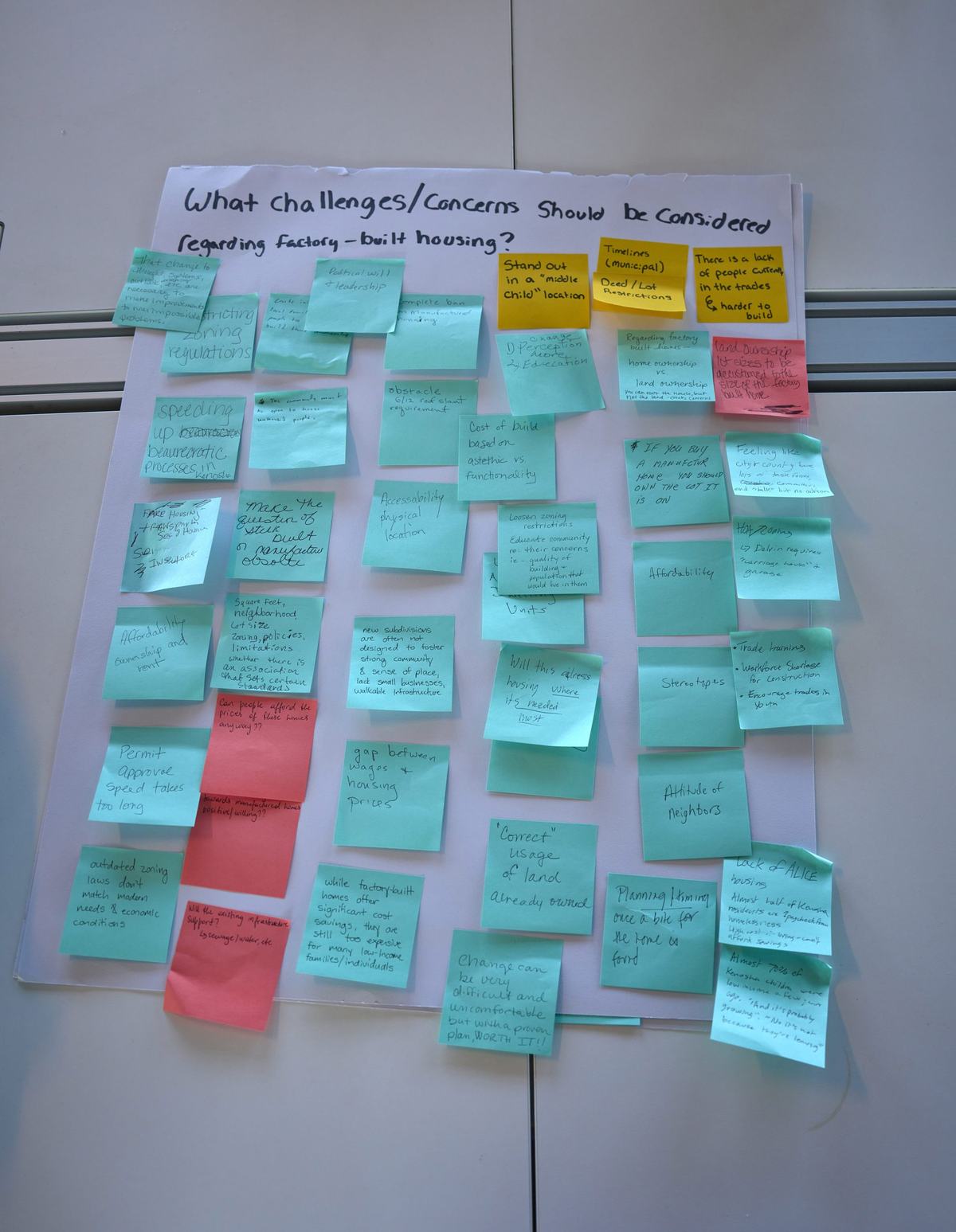
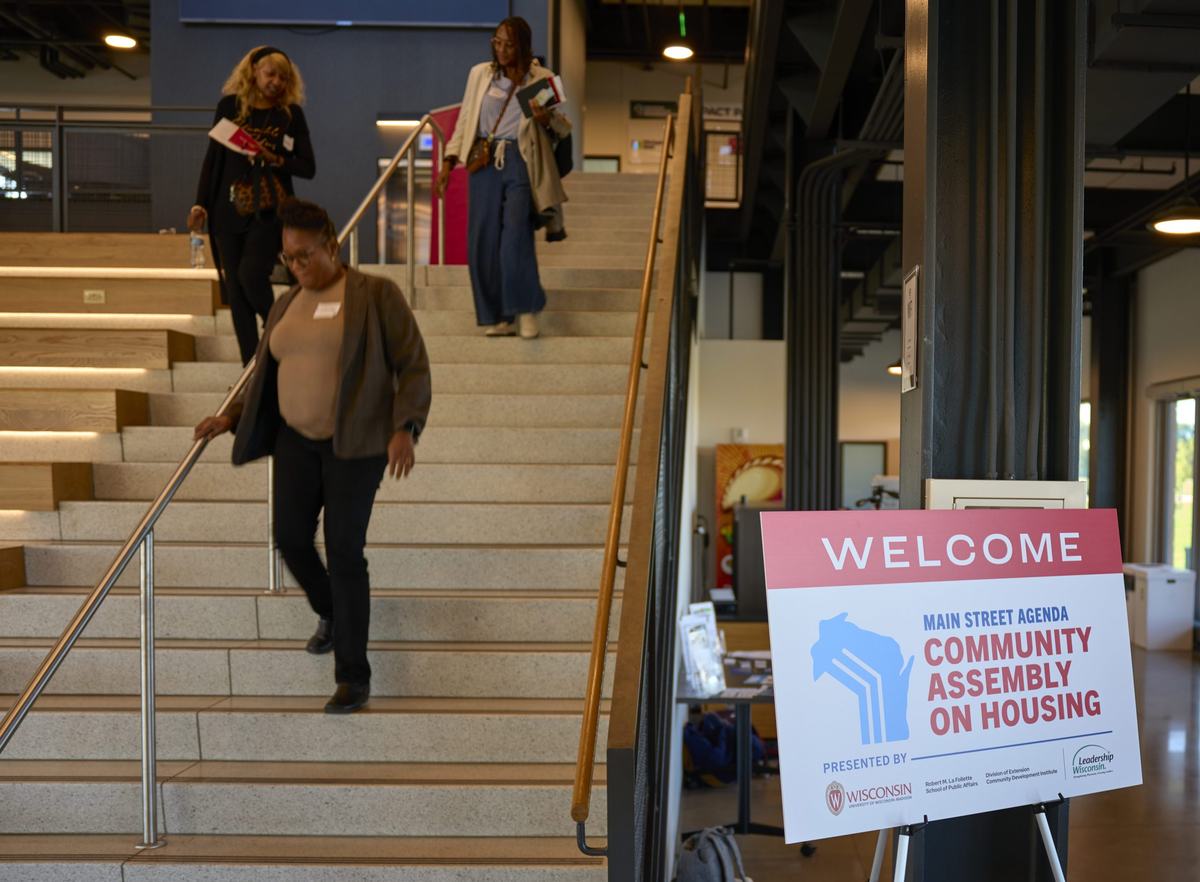
The La Follette Main Street Agenda project — which the Kenosha event was part of — began in 2022 as town halls to address voter concerns. In 2024, it hosted dinners around the state for residents to converse across differences. Now the goal is to seek solutions.
This year and next, Wichowsky, who also has an appointment in the university’s extension school, said she and her students will work with members of the group Leadership Wisconsin and local officials in five locales across the state to lead community assemblies.
The goal, she said, is to have people not just walk up to a microphone and say what upsets them, but to deliberate with others to find an approach everyone can get behind. The housing issue in Kenosha was hardly settled on one Saturday. But the gathering did produce recommendations attendees voted on to share with the Kenosha County Housing Task Force that spanned matters from design preferences to concerns about transportation, zoning, home ownership and energy efficiency.
Related: ‘I can tell you don’t agree with me’: Colleges teach kids how to hear differing opinions
One lesson students are learning is that bite-sized municipal issues are compelling and worth getting their arms around. It’s also the point of a new course, Local Democracy offered for the first time last spring at Olin College of Engineering in Needham, Massachusetts.
The professor, Erhardt Graeff, is also a Needham town meeting member and library trustee who last spring had students attend a meeting where residents debated a classic high-octane issue: Should the town narrow a road and remove parking spaces to make a main street more pedestrian-friendly?
One of the students, Peter Schnell, a senior from Portland, Oregon, majoring in engineering with a focus on sustainability, was stunned when he arrived. “There’s probably 40 or 50 people in the room who are taking their turn saying why they don’t like the plan,” he said. “I was like, ‘Whoa, like these people care.’”
Soon, Schnell, who was working with a nonprofit focused on water and land use, started attending meetings of the Earth Removal Committee in Carver, Massachusetts. The committee oversees permits for excavation, which has become a controversial local issue.
Graeff, who wants students engaging with uncomfortable issues, recently had first-year students in his Democracy and Media class place cards with “a governance scenario” on an axis from “experts deciding versus everyone affected by that issue deciding.” Scenarios included issues like how much lead should be allowed in drinking water, whether to build a new middle school as well as the earlier question of whether to lose a lane of traffic to make a downtown more walkable.
When students shared what produced the most fervent debate, the downtown issue drew sparks; one side argued urban planners should decide city layout while the other said those most affected should decide.
For students, such disagreement that is a regular part of class feels refreshing. “We have very productive conversations here that I haven’t had with adults,” Jada Quijano, from New York City, said afterward.
Maya Dreymann, from Panama City Beach, Florida, said a lot of the conversations they have in class wouldn’t fly in her high school. “Our teacher would be like, ‘OK guys, do not mention this outside of class because then I’ll get fired,’” she said.
Dreymann, however, was clear that tough conversations “need to be had — because we are going to be the next people to have those conversations in the government.”
Contact editor Caroline Preston at 212-870-8965, via Signal at CarolineP.83 or on email at preston@hechingerreport.org.
This story about public policy was produced by The Hechinger Report, a nonprofit, independent news organization focused on inequality and innovation in education. Sign up for the Hechinger newsletter.
