

Who's behind Wisconsin's political ads? Following the money beyond the disclaimer
ANALYSIS – Television commercials, social media videos and campaign mailers were hard to miss in Wisconsin during the weeks leading up to the Nov. 3 election.
Many carried a familiar disclaimer identifying the organization that paid for the message. But how much can voters actually learn about the money behind those advertisements?
Civic Media examined two advertisements from Wisconsin's 2026 governor's race to see what public financial records reveal about the money behind them.
Start with the disclaimer
One advertisement opposing Democratic gubernatorial candidate David Crowley identifies Right Direction Wisconsin PAC as the organization that paid for it.
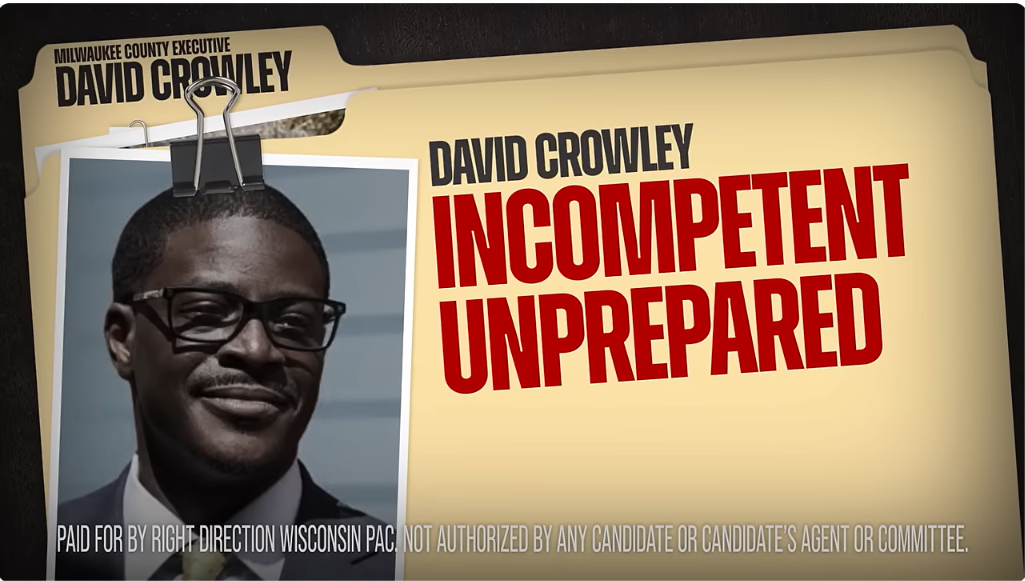
The disclaimer reads: “PAID FOR BY RIGHT DIRECTION WISCONSIN PAC. NOT AUTHORIZED BY ANY CANDIDATE OR CANDIDATE'S AGENT OR COMMITTEE.”
Wisconsin law requires political committees to identify themselves in advertisements expressly advocating for or against a candidate, with certain exceptions.
Elizabeth Shimek, managing legal counsel for campaign finance at the Campaign Legal Center, said those disclaimers can help voters identify who is behind a political message.
“We do know that disclaimers when they provide enough information are such an important and useful tool,” Shimek said.
Following the money through Wisconsin
The Wisconsin Ethics Commission maintains Wisconsin Sunshine, a free database of campaign finance records available to the public.
To find Right Direction Wisconsin PAC's filings, select “Explore Data,” open the “Reports” tab and search for the organization's name. Within a report, the “Top 10 Donors” tab identifies major contributors, while “Report Transactions” provides the individual financial entries.
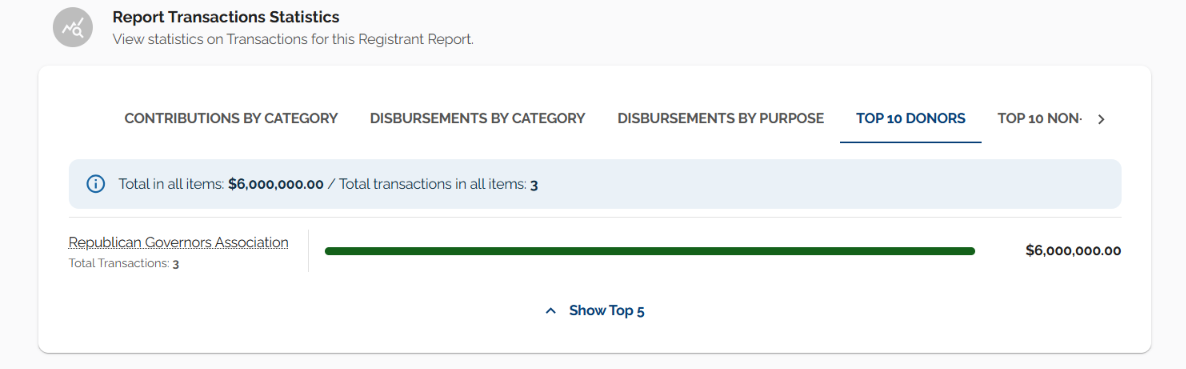
Civic Media examined the PAC's September report, filed September 29, 2026, and its fall pre-election report, filed October 26.
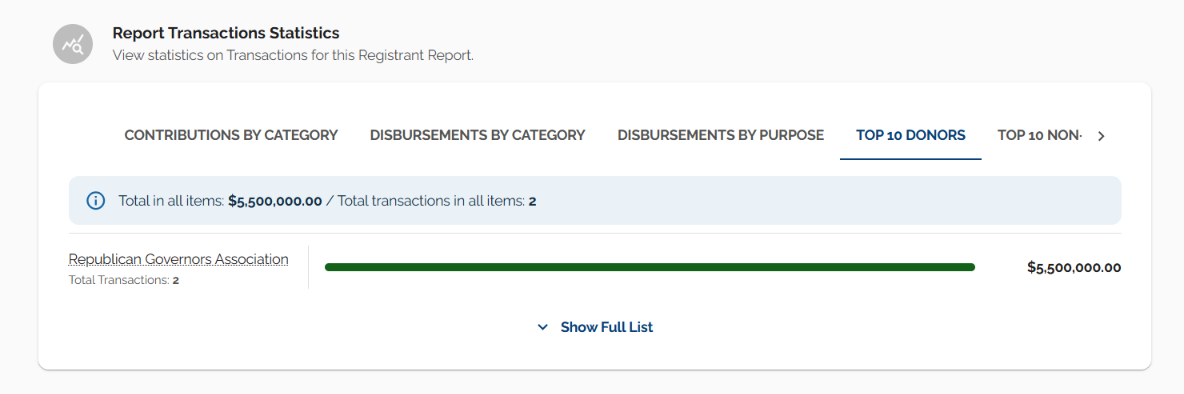
Wisconsin Sunshine records show two contributions totaling $5.5 million from the Republican Governors Association to Right Direction Wisconsin PAC in its September 2026 report.
Following the money beyond Wisconsin
The Republican Governors Association raises money nationally to support Republican candidates for governor. Its financial disclosures are filed with the Internal Revenue Service and are available through ProPublica's 527 Explorer.
In 527 Explorer, search for “Republican Governors Association.” Under “IRS disclosures,” select the 2026 third-quarter report, which covers July 1 through September 30. The report lists contributors, amounts and dates.
Among the contributions Civic Media found in that report were $10 million from the Elon Musk Trust, $6 million from the New Robert Thomas Bigelow Revocable Trust and $2.5 million from Florida Power and Light Company.
Those contributions went to the national Republican Governors Association. The records do not establish whether any of that money went to Right Direction Wisconsin PAC or paid for its advertisement opposing Crowley.
Nick Ramos, executive director of the Wisconsin Democracy Campaign, said following political contributions back to their original sources isn't always straightforward.
“There isn't a lot in terms of disclosures when it comes to our ads, when it comes to who is spending money and even being able to find out who is the original source of this money,” Ramos said.
Who funds Protect Our Wisconsin?
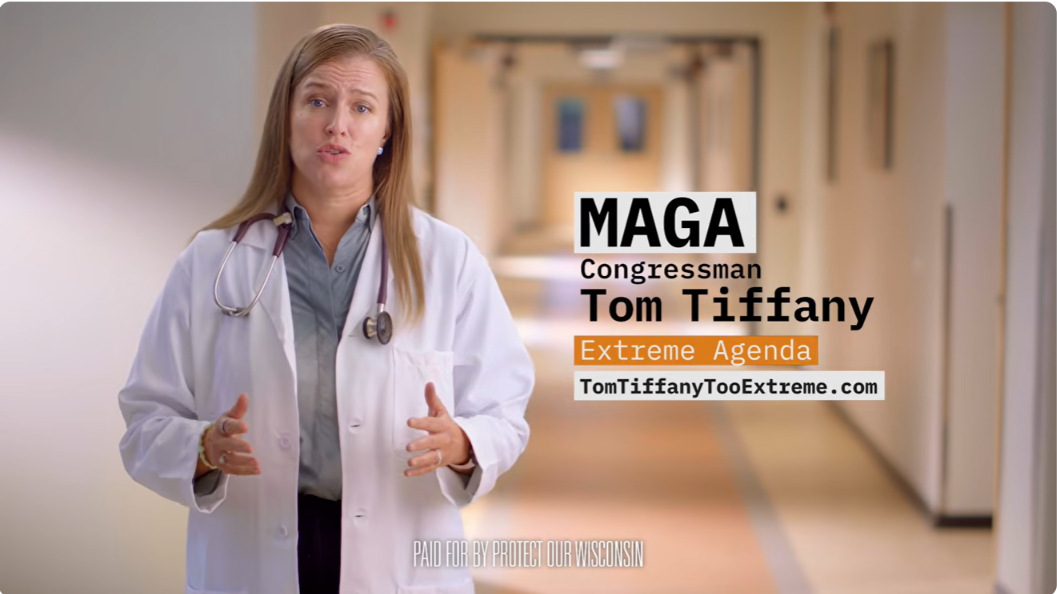
An advertisement opposing Republican gubernatorial candidate Tom Tiffany identified Protect Our Wisconsin as its sponsor. The organization is backed by the Democratic Governors Association.
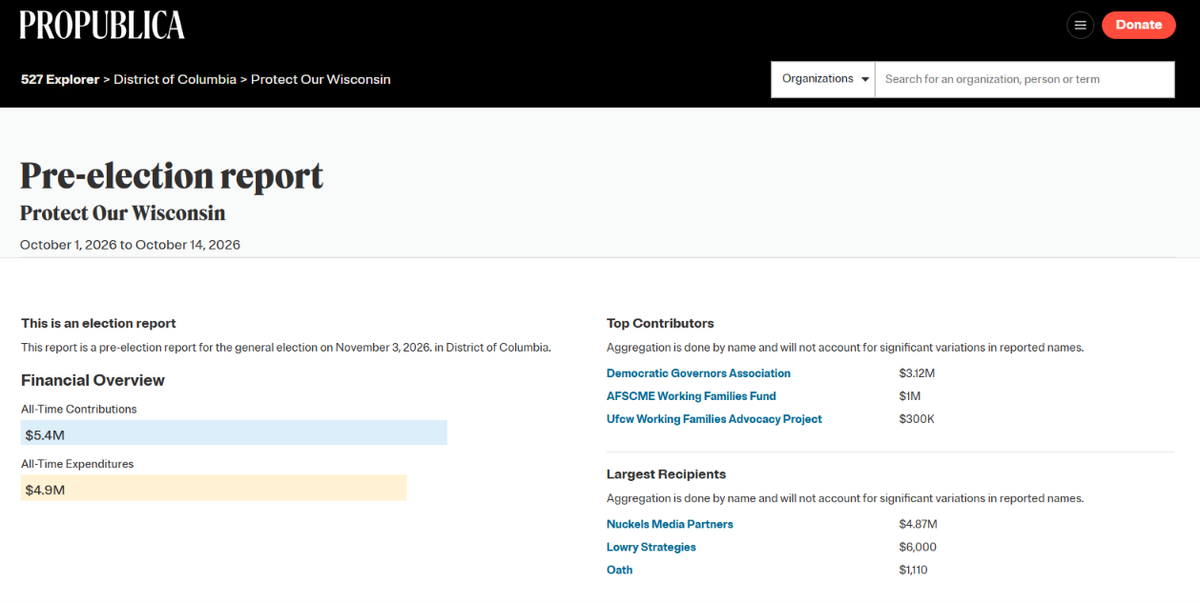
Protect Our Wisconsin's financial disclosures are also available through ProPublica's 527 Explorer. Its 2026 third-quarter report covers July 1 through September 30, while its pre-election report covers October 1 through October 14.
Together, the two filings list approximately $15.5 million in contributions to Protect Our Wisconsin. The Democratic Governors Association accounted for approximately $10.7 million of that amount.
Other contributors included the AFSCME Working Families Fund, the United Association Political Issues Fund and the UFCW Working Families Advocacy Project.
What the records show
Both Republican- and Democratic-aligned political organizations use campaign-finance rules to raise money and transfer contributions between groups. Those transactions can involve national organizations and groups operating in Wisconsin, with financial connections that aren't always apparent from political advertisements.
Voters can use state and federal databases to examine other political organizations, regardless of which candidates they support or oppose. The records can identify contributors and show how money moves between organizations, although they don't necessarily establish which contributions paid for a particular advertisement.
Shimek said that information can help voters evaluate the messages they encounter.
“When you have that information and you can assess the message, you have a better ability to decide what you're going to do with all of these ads that have been bombarding you,” Shimek said.
About this reporting
For Right Direction Wisconsin PAC, Civic Media examined its September 2026 report, filed September 29, and its fall pre-election report, filed October 26, in the Wisconsin Ethics Commission's Sunshine database. The September report covers July 28 through September 23, and the fall pre-election report covers September 24 through October 19.
For the Republican Governors Association and Protect Our Wisconsin, Civic Media examined financial disclosures filed with the Internal Revenue Service and available through ProPublica's 527 Explorer. The specific federal filings were:
- Republican Governors Association third-quarter report, covering July 1 through September 30, 2026.
- Protect Our Wisconsin third-quarter report, covering July 1 through September 30, 2026.
- Protect Our Wisconsin pre-election report, covering October 1 through October 14, 2026.
The figures reflect the reports examined, not final totals for the 2026 election cycle. Wisconsin's January continuing reports are due January 15, 2027, and federal Section 527 year-end reports are generally due January 31, 2027.
The amounts reported here reflect contributions received by political organizations, not necessarily money spent on the advertisements examined. The records do not establish which individual contributions, if any, funded those advertisements.
Related coverage
Who pays for Wisconsin elections? How the rules move millions.
