

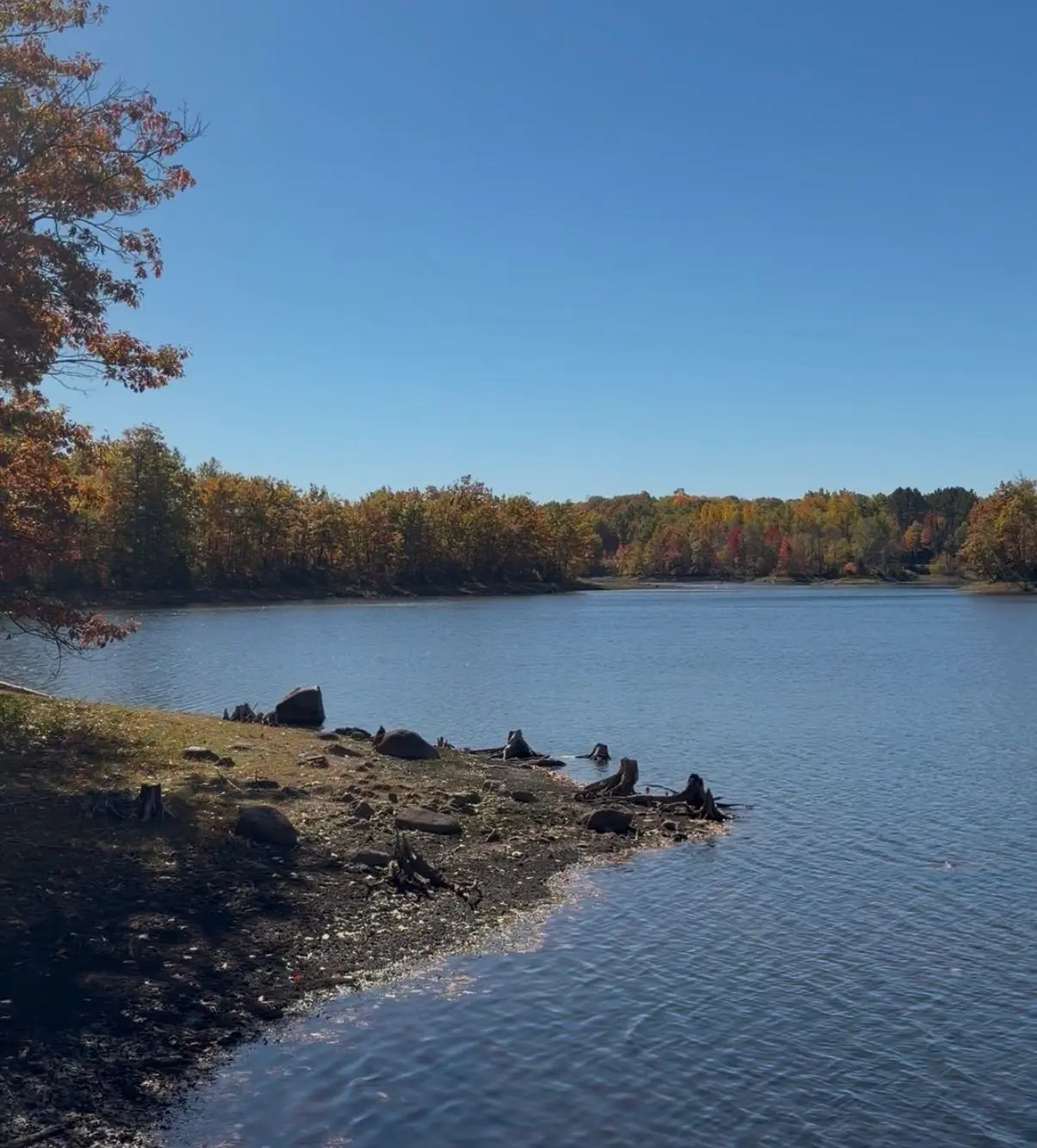
Low water levels expose shoreline along Drummond Lake in Bayfield County.
Source: Maddie Schaffer
Drought reaches most severe level in northern Wisconsin
Parts of Ashland, Bayfield, Douglas, Iron and Sawyer counties are experiencing exceptional drought, the most severe category.

Oct 5, 2026, 12:10 PM CT
Share


Drought conditions have reached their most severe level in parts of northern Wisconsin.
According to Thursday’s U.S. Drought Monitor report, parts of Ashland, Bayfield, Douglas, Iron and Sawyer counties are experiencing exceptional drought, the most severe category.
This marks only the second time Wisconsin has reached exceptional drought since the U.S. Drought Monitor began tracking conditions in 2000.
Much of the surrounding area is also in extreme drought, the second-highest category.
James Yach, Secretary’s Director for the West Central Region with the Wisconsin Department of Natural Resources, says the main reason is a lack of rain.
“The northern part of the state has not had significant rainfall events for several weeks at the minimum, probably eight to ten weeks, which is the driver for these low water levels and dry conditions that we're seeing.”
Although dry conditions in the fall aren't unusual in Wisconsin, Yach says what's different this year is how early the more serious drought conditions started and how long they've lasted.
That has left water levels noticeably lower across much of northern Wisconsin. Yach says engineered reservoirs, like flowages, can see larger swings in water levels during prolonged dry conditions.
However, some of the biggest concerns are in rivers and streams.
“Probably the most impacted bodies of water are rivers and streams. With these reduced flows, sometimes in some areas it's been really significant, and there have been pretty significant reports of stranding of mussels and fish,” said Yach.
He says significant rainfall could improve conditions, but average fall rainfall likely wouldn't be enough to make up the current deficit.
“Going over the winter, we're going to be monitoring it closely. We do have what's gearing up to be a fairly strong El Niño winter, which could strain the conditions even more come spring,” Yach said. “You kind of start worrying about what does spring bring for the following year for the reservoirs, the rivers, the streams and lakes and those types of things.”
The DNR is also reminding people to use caution around low water levels, which can expose new hazards for boaters. The agency is also reminding people to stay off exposed lake and stream beds. Driving motor vehicles on them is illegal and can damage habitat.

Maddie Schaffer is a reporter at WBZH and WHSM, covering the Hayward area and surrounding areas in the Northwoods. Email her at maddie.schaffer@civicmedia.us.


