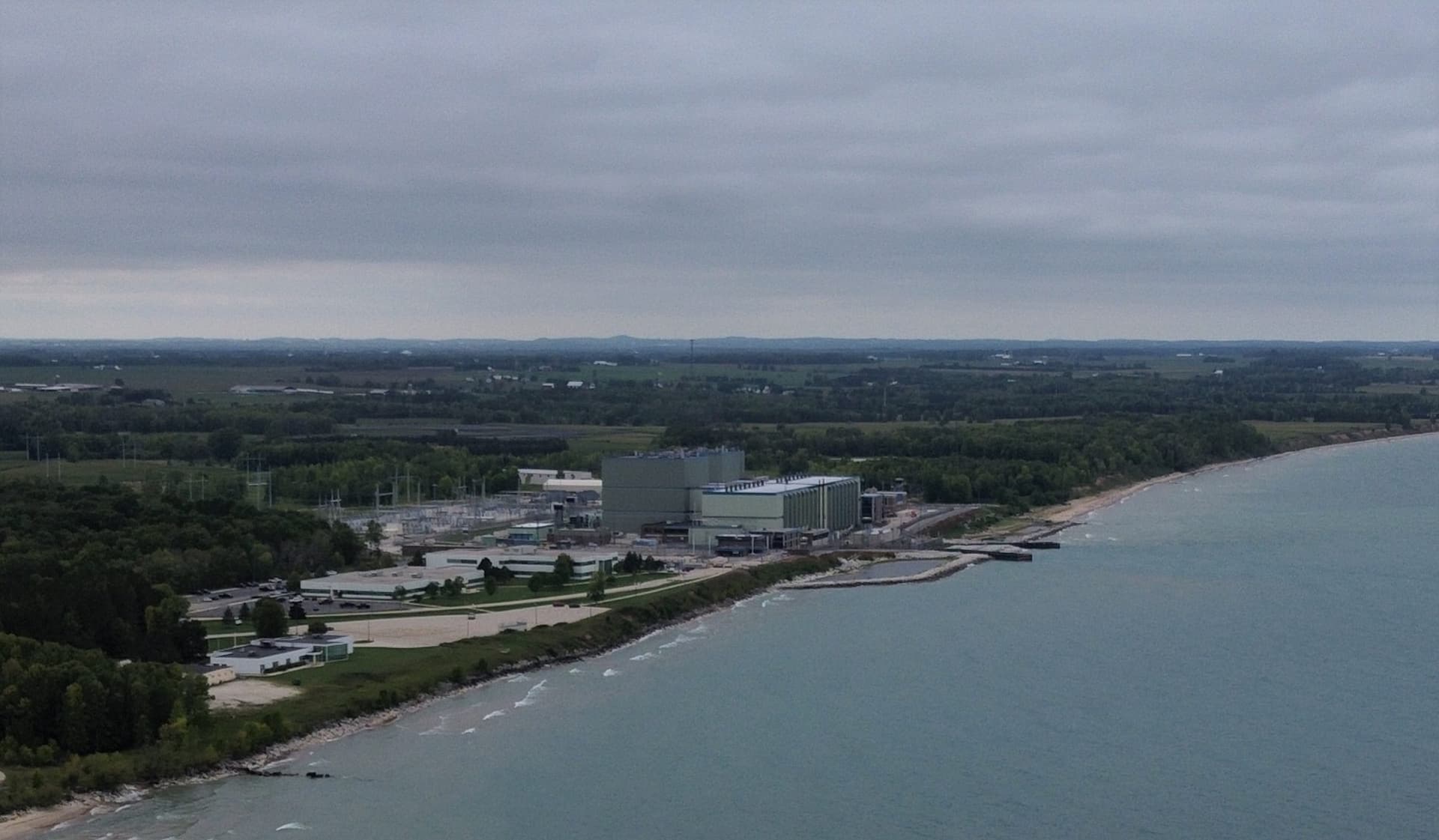


We Energies signed a new 20-year agreement to purchase electricity from the Point Beach nuclear plant in Manitowoc County, resolving uncertainty about the relationship between the utility and the state’s largest power plant.
The agreement, disclosed in a Tuesday U.S. Securities and Exchange Commission filing, still requires sign-off from Wisconsin’s Public Service Commission (PSC).
The roughly 60-year-old facility is Wisconsin’s only active nuclear power plant. We Energies owned the plant until 2007, when it sold Point Beach to a Florida-based utility. It currently purchases most of the plant’s output from independent energy infrastructure giant NextEra Energy.
But the electricity Point Beach generates is particularly expensive. We Energies spends about twice as much on fuel as its sibling utility, Wisconsin Public Service Company; the cost of fuel for Point Beach accounts for a large share of the difference. Milwaukee-based WEC Energy Group owns both utilities. The price of each megawatt hour of electricity produced by the plant rises by more than 7% each year under We Energies’ current arrangement with NextEra.
Ratepayer advocates have pushed We Energies to rethink its Point Beach contract for years. The PSC directed the utility to work with ratepayer groups to “review alternatives” to the power purchase agreement in 2019 as part of a broader rate case, and WEC Energy Group CEO Scott Lauber signaled that his company was considering alternatives as recently as last month.
We Energies’ latest SEC filing did not divulge most details of the new agreement, but spokesman Brendan Conway told Wisconsin Watch that it “will provide customers with fuel savings compared with the current (agreement) when it goes into effect.”
If the PSC approves the proposed agreement, We Energies would buy 86% of the plant’s energy for another two decades. Its current contract is set to expire by 2033, according to the new filing.
Wisconsin’s Citizens Utility Board (CUB), a nonprofit representing residential and some small commercial electricity customers statewide before the PSC, is among the most vocal critics of the current Point Beach contract.
CUB plans to review the new proposal with an “eye toward learning how much savings are in store for customers” compared to the current steep annual price increases, said CUB Executive Director Tom Content. “Given the climate and carbon commitments of the tech companies, I’ll be interested to learn whether Big Tech companies opening data centers in eastern Wisconsin want the carbon-free benefits of nuclear. That could relieve some of the price pressure being felt — every year — by 1.1 million We Energies customers.”
We Energies is also eyeing an opportunity to add more nuclear energy to Wisconsin’s grid: the decommissioned Kewaunee Power Station. WEC Energy Group and the plant’s owner, Energy Solutions, are awaiting the Nuclear Regulatory Commission’s approval to restart production at the site more than a decade after a glut of cheap natural gas from the fracking boom drove it out of business.
There’s no shortage of demand for electricity. A draft PSC report published in June projects Wisconsin’s peak electricity demand will rise 40% in the next five years, driven largely by new data centers in Port Washington, Mount Pleasant and Beaver Dam — possibly with more to come.