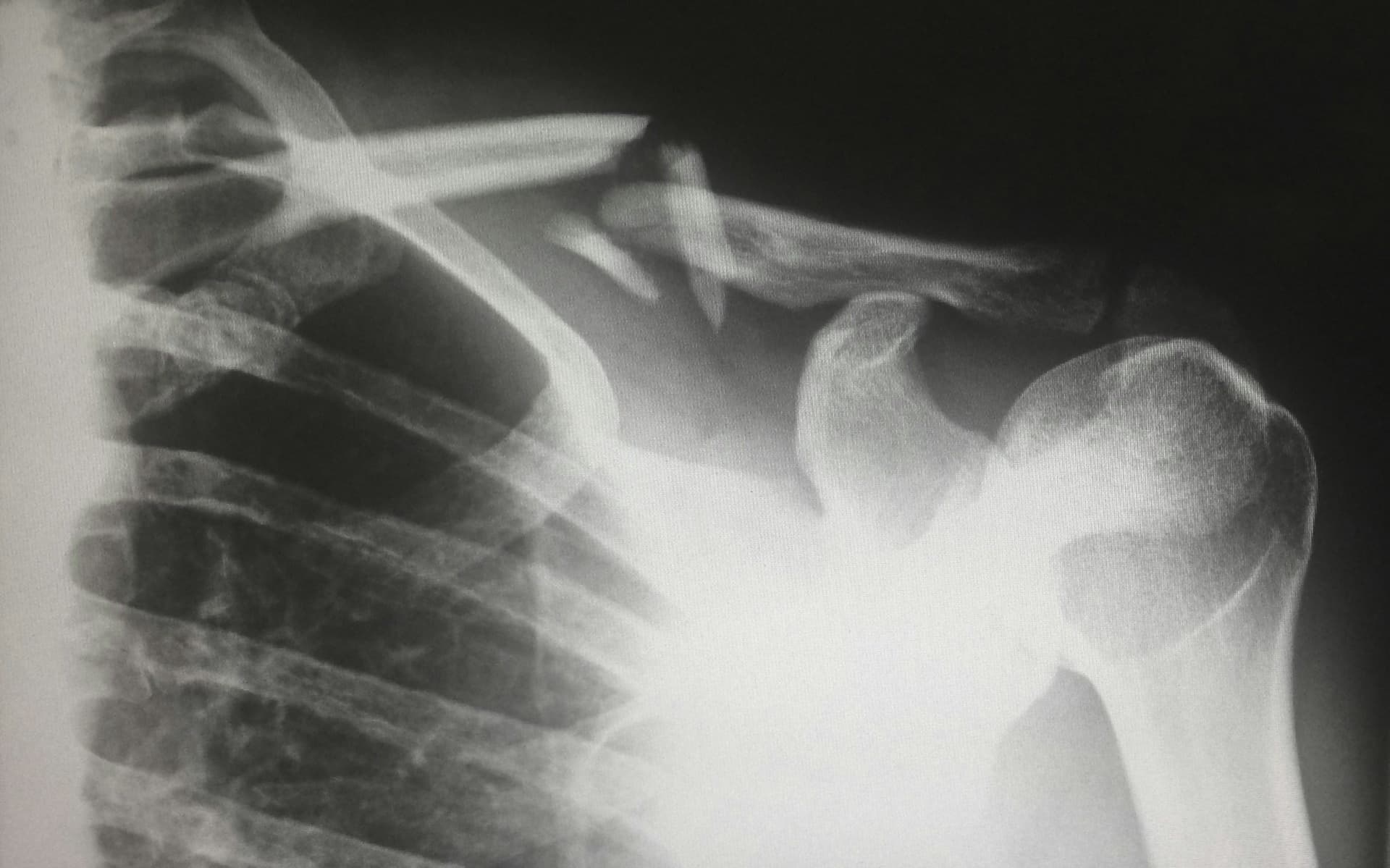


For rural residents, suffering a traumatic injury doesn’t just mean a quick trip to the emergency room.
Research has shown that rural residents are at higher risk of death from trauma due to a lack of access to care. For many rural residents suffering from a traumatic injury, the greatest challenge they face is how quickly they can get to a trauma center. Some doctors and researchers are working to fix that.
“When it comes to getting rural patients to an appropriate level of care, in some cases we’re talking about hours, not minutes,” said Bracken Burns, professor of surgery at East Tennessee State University (ETSU).
At ETSU, Burns was one of a number of physicians and community leaders who developed a regional network of hospitals that could better serve trauma patients in Appalachian Tennessee.
In 2018, Ballad Health partnered with the ETSU Quillen College of Medicine to establish an advisory group to assess the trauma system in their area. They determined the best solution was to consolidate the regions’ two Level 1 trauma centers into one at Johnson City Medical Center, while maintaining Level 3 trauma services at Holston Valley Medical Center and Bristol Regional Medical Center. That consolidation became the Ballad Health Trauma Network, a regional system that coordinates care and gets patients to the hospital that best meets their needs.
Even if there is a hospital nearby, that emergency room may not have the equipment necessary to adequately treat traumatic injuries, Burns explained. Transportation to a larger hospital can sometimes take hours, and there may not be ambulances available to transport them. And if a patient gets to a larger hospital for treatment, there may be a time lag between the time they arrive in the emergency room and when they can be admitted and seen.
Trauma is not always the result of auto or equipment accidents, but can result from a wide range of more common incidents, Burns said.
“One of the most common things we see that people probably wouldn’t think about as trauma care is falls — not particularly meaning falling off a ladder or off a skyscraper, but literally falling from a standing height or out of a chair. That can be a life-threatening issue to an older person on anticoagulants,” he said.
“We certainly see a lot of people involved in motor vehicle accidents. and we do see penetrating trauma as well, like stab wounds, and gunshot wounds … but another area that is a little more unique to the rural environment is activities that you don’t see in urban environments, things like ATV accidents and injuries related to farm animals,” he said. “It’s a really, really wide range as to what those injuries might be.”
Ensuring rural patients have access to care that could address those injuries required collaboration, he said.
”The importance of establishing a network is understanding what resources are available at each facility,” Burns said. “Say we have an elderly person who falls and breaks their hip. We have several hospitals within the health system that can repair a broken hip. We also have several hospitals within the health system that don’t have orthopedic care. So, for those facilities, it’s about getting the patient to the closest appropriate facility to get the care that they need.”
In 2024, a national study looked at the success of the network and found “significantly decreased’ death rates and decreased transfers to other facilities from the most serious traumatic injuries.
That study, published in The American Surgeon, reported that after the consolidation, the rate of deaths among patients who were at the highest level of trauma activation (those who required surgery within the first 24 hours of admission) decreased by almost 24%. The study also found that, regardless of the level of injury, patients were less likely to need skilled nursing or rehabilitation after being discharged.
The change meant that hundreds of lives were saved because of the work put into the trauma system.
“The only thing surprising about the results of the study is the significance of the improvement in survival rates for patients most likely to die from their injuries,” Burns said. “We expected improvement in mortality rates, and we expected to see fewer patients transferred out. But the significance of the improvement is stunning and is a result, I think, that experts will point to as support for the regionalization of trauma care.”
That change in the way trauma care is handled in rural communities could impact the lives of millions, Dr. Jeffrey Kerby, chair of the American College of Surgeons Committee on Trauma, wrote in a blog post for the American College of Surgeons.
Nationally, as of 2022, about 47 million people in the U.S. live more than an hour away from a high-level trauma center. Simply equipping rural hospitals to handle traumas isn’t the solution, Kerby noted.
“If we wanted to address the immediate needs of rural patients, we would need to build 110 trauma centers across the US, which is not realistic,” Kerby wrote.
In April 2026, an opinion paper published in the BMJ Journal by Kerby and nine other physicians recommended the creation of “Regional Medical Operations Coordinating Centers” that would function like hub-and-spoke networks to foster collaboration between healthcare facilities.
“In rural settings, where distance, low volume, and resource scarcity pose ongoing challenges, RMOCCs can knit together disparate systems by coordinating communication across the region, managing hospital capacity and patient flow to minimize potentially avoidable transfers, and facilitating transparent management of resources like teletrauma capability and blood products to ensure equitable care throughout the region,” the authors wrote.
Burns said having trauma networks doesn’t automatically mean rural residents would leave their communities to receive treatment. The goal, he said, is to keep patients as close to home as possible. But when a patient needs services their home hospital cannot provide, it’s important to get them to the right facility, and to smooth their transition so other hospitals are prepared for them.
“I’m a doctor, so my first and only priority at any given time is patient care,” he said. “When we try to build a network, that’s really where our focus is — what’s in the best interest of the patient and how do we do that safely and efficiently?”