



Sign up for Chalkbeat’s free weekly newsletter to keep up with how education is changing across the U.S.
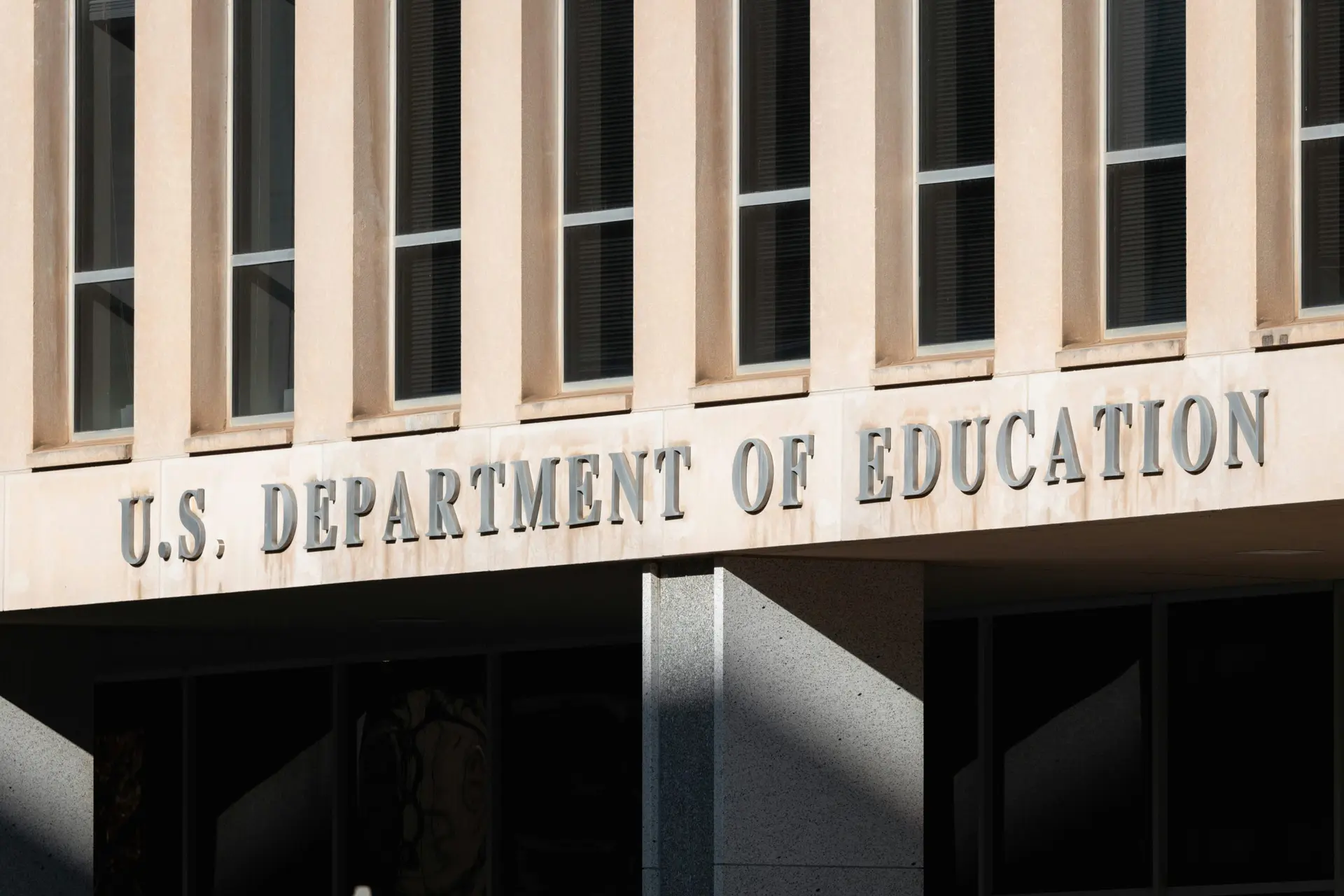
Schools that discipline students of color at higher rates than white students won’t be in violation of federal civil rights law for that disparity alone, the U.S. Department of Education announced Thursday.
The Education Department’s regulatory changes prohibit the agency’s civil rights investigators from using broad demographic statistics — such as data about discipline, Advanced Placement class enrollment, and school admissions — to demonstrate discrimination.
“A child is so much more than a number in a data set,” Assistant Secretary for Civil Rights Kimberly Richey wrote in a press release. “The left’s notion of ‘equity’ should never prevent teachers from keeping their classrooms and students safe.”
The change is part of a wider effort by President Donald Trump’s administration to eliminate what’s called disparate impact regulations across federal agencies. The Trump administration says President Barack Obama’s administration wielded such data improperly in discrimination investigations.
Experts and civil rights advocates decried the agency’s decision to abandon what they described as an important tool in civil rights investigations, one that they said can help illustrate more subtle and even unintentional systemic discrimination on the basis of race or national origin. Critics of the move also said the department’s announcement exaggerated the impact of data on such investigations.
“This kind of severs the guardrails that protect from those scenarios in which unjust, unnecessary burdens literally cause kids to face discrimination at school,” said Michael Pillera of the Lawyers’ Committee for Civil Rights Under Law and a former civil rights attorney for the Education Department.
Civil rights advocates also rebuked the Education Department’s lack of process in making the regulatory change. The agency bypassed some rulemaking procedures, which let the public weigh in before adopting a rule, said Shiwali Patel, senior director of education justice at the National Women’s Law Center.
The department’s Office for Civil Rights, which investigates civil rights complaints about federally funded schools, has been at the center of a lot of upheaval. The office has been decimated by layoffs — some of which were then rescinded — and the agency announced earlier this summer that the Justice Department would play a role in some aspects of civil rights enforcement in schools.
Experts said civil rights investigations have often looked for unlawful discrimination through two lenses, either differential treatment or disparate impact. Differential treatment occurs if a student is intentionally subject to different treatment based on their race. Disparate impact applies to policies that may seem neutral, but impacts certain groups disproportionately.
“It helps us kind of shine a light on what are the hidden inequities in our systems that our public policy or our practices writ large might have inadvertently perpetuated,” said Amy Loyd, CEO at All4Ed, a nonprofit education advocacy group.
Discipline has often been central to arguments around disparate impact. In a 2014 letter to schools, the Obama administration laid out guidance that called statistical analysis of disciplinary data “an important indicator of potential violations.” The first Trump administration rescinded that letter in 2018.
Conservatives have argued the practice of linking disparate impact to civil rights violations or discrimination is flawed. In 2018, Michael Petrilli of the Thomas B. Fordham Institute said that in addition to legal questions, the approach outlined in the 2014 letter “will tie the hands of teachers and school administrators when it comes to maintaining discipline, possibly leading to greater disorder and even violence.”
Jonathan Butcher of the Heritage Foundation said just because statistics may show a certain policy disproportionately affects one group doesn’t make the policy wrong.
“I don’t think the answer to that is adjusting policies so that we get the numbers we want,” he said.
But civil rights investigations don’t solely hinge on data, said Robert Kim, an attorney and the executive director of the Education Law Center. The numbers often represented a starting point in an investigation, and schools had the opportunity to explain statistical differences.
“You would never lurch to a conclusion of discrimination subject to government-imposed remedy without looking further at all,” he said.
Discipline isn’t the only area where officials have used statistics to look for possible discrimination in education. The Office for Civil Rights, in previous administrations, had also cited disparate impact in the following investigations:
- Advanced class access: In 2016, the Education Department cited a significant disparity between the proportion of white students and Black and Hispanic students identified as advanced learners in the Madison Metropolitan School District in Madison, Wisconsin. Nearly 40% of white middle school students were considered advanced, compared with 9% of Hispanic and 6% of Black middle schoolers. The district agreed to a settlement to review its advanced programs, among other changes.
- Special education placement: A 2013 investigation letter noted that Black students were overrepresented in special education in the Iowa City Community School District. About 29% of students in special education programs were Black, even though they made up 17% of the district’s overall population in the 2012-13 school year. The district agreed to review its screening processes and get assistance from experts.
- Admissions policies: A 2014 letter noted that some schools in a Texas charter school network enrolled a significantly lower proportion of English learners than local public schools. The charter school network, Harmony Public Schools, agreed to review and modify its enrollment processes.
Lily Altavena is a national reporter at Chalkbeat. Contact Lily at laltavena@chalkbeat.org. Lily is on Instagram, Tik Tok, and Facebook.


