

When Meredith Dean started the first Community Works chapters, she saw people reengaging in politics.
“We were seeing more and more volunteers coming in who had been totally disillusioned with politics across the board, or had just been disengaged Democrats, or had never been involved, — and yet they were coming in through Community Works,” said Dean, the national director of Community Works.
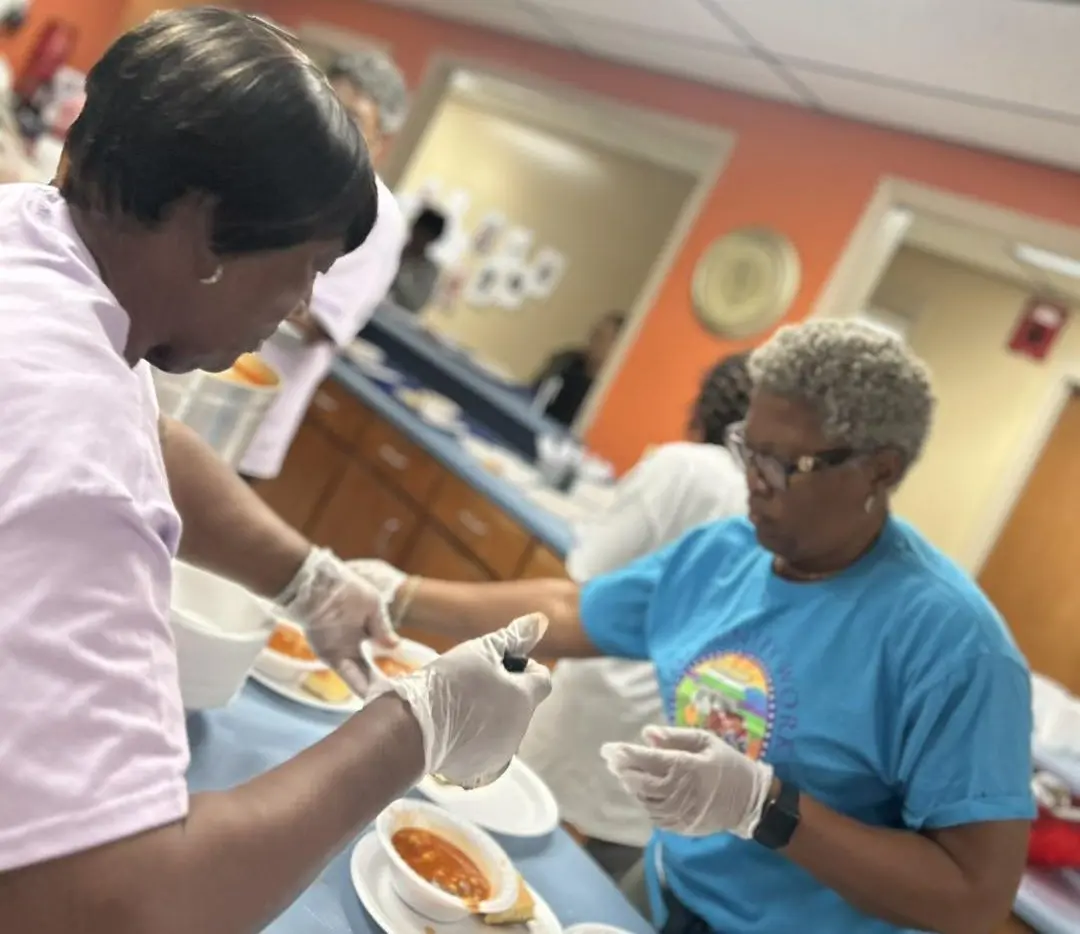
Community Works, a project under the Rural Urban Bridge Initiative (RUBI), organizes volunteers to collaborate with local organizations on non-political efforts. Chapters address local needs through events like waterway cleans ups, diaper drives, and food distribution events.
Unlike traditional electoral organizing, Community Works runs year round rather than around the election cycle.
“It’s not a matter of persuading people to our political point of view, it’s a matter of rebuilding trust with neighbors,” Dean said.
The first chapters started in Virginia in 2023. There are now 15 Community Works chapters in seven states: Alabama, Georgia, Illinois, Kansas, Maryland, Virginia, Washington and Wisconsin — each working in a rural community to address problems locally.
“In many ways, this is what progressives have spent the past 120 years trying to do,” said Nicholas Jacobs, lead researcher of a study on Community Works and a professor of government at Colby College.
Community Works, although not focused on electoral politics and administered by RUBI rather than the Democratic Party, requires that chapter leaders attend local Democratic committee meetings.
“We want it to be connected with the local Democratic committee, but not run by the local Democratic committee, and we’re not doing it on behalf of the Democratic Party,” Dean said.
Dean said that she sees Community Works as a way to cultivate and uplift leaders within rural communities.
Shanelle Carr, the Community Works local coordinator in Jenkins County, Georgia, moved back to her home county six years ago when her husband bought a church in Millen, the county seat.
“Community Works literally took me from the couch to the council,” Carr said.
Carr had never been involved with local politics, but started attending local political meetings to fulfil Community Works requirements.
“If you’re not up close and really active, you can miss what’s taking place,” Carr said. “You can miss the need for those programs. You can miss the need and how it really aids those families.”
She was appointed to a vacant school board seat in 2025. She ran to fill — and was elected to — the seat in May.
Last summer, Carr’s Community Works chapter held a week-long summer camp, free to children in Jenkins County. This summer, since their partner organization lost federal funding, Carr said that they cannot offer the same program.
“The big decisions up there affect us even the more,” Carr said. “We’re the ones who really are missing out on resources because of our location and our demographics.”
Polarization Decreases in Towns With Community Works Chapters, Study Shows
Jacobs led a study surveying partisan attitudes in six rural, majority Republican counties with Community Works chapters: four Virginia counties, starting in 2023, and two Georgia counties, added in 2024.
Attitudes towards both parties — nationally and locally — measured on a 0 to 100 scale were compared between counties with Community Works chapters and those without, both before Community Works chapters started and after.
Jacobs found that counties without Communities Works chapters, positive views of Republicans nationally rose by 11 points on the 0 to 100 scale. Negative views of Democrats nationally rose by 8 points, indicating increasing polarization as perceptions of each party moved further apart.
Counties with Community Works chapters saw attitudes towards both parties — national and locally — hold stable over the same time period.
“Communities hit the brakes on polarization within a relatively short period of time,” Jacobs said.
Jacobs said that these results indicate Community Works “tempering” — not reversing — partisan polarization.
Jacobs also notes that communities with Community Works chapters were not uniquely predisposed to counter partisan polarization. At the outset of the study, counties with Community Works chapters had more favorable views of Republicans and more unfavorable views of Democrats than the comparison counties.
Dean said that she sees Community Works changing the Democrats’ perception in predominantly conservative rural communities.
“When they see Dems out in the community, they’re in front of the courthouse protesting,” Dean said. “This is saying, that’s great — I get why we need to be protesting now, and the value of that — but can we also build on that, and again show that same energy and that same collective effort being put forth by Democrats, progressives, and liberals to actually serve our communities.”
Dean said she hopes to have 20 chapters by the end of the year, 40 by the end of 2027, 80 by 2028, and 300 by 2030.
Dean holds Community Works introductory sessions every fourth Wednesday of the month at 6:30 p.m. EST.
To start a chapter, a five-person leadership group must complete a series of trainings led by Dean. Chapters are required to participate in at least two events per month and to initiate one event per quarter.
“It’s a long-term approach of operating locally, working locally, caring locally, and again bringing people back together across the partisan lines,” Dean said.