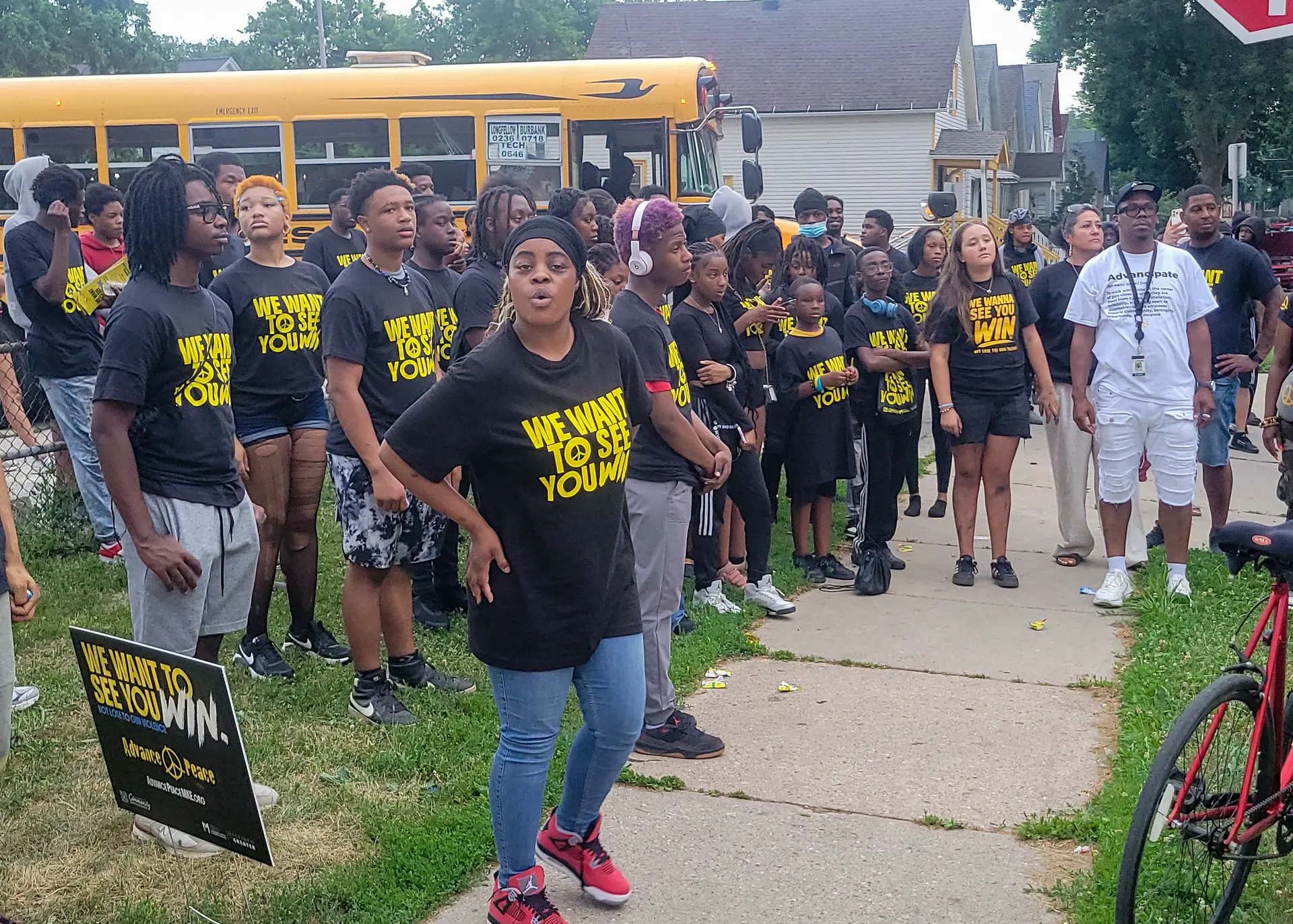


Progress is possible, and Milwaukee’s decline in violent crime in recent years suggest it’s happening.
Advocates and violence prevention workers say keeping crime trending down depends on investment in the trusted relationships that make violence less likely.
Examples of investments that can create tangible alternatives to violence, they said, are mentorship instead of isolation, employment instead of boredom and community instead of retaliation.
At the center of it all is trust, said Reggie Moore, director of community safety, policy and engagement for the Comprehensive Injury Center at the Medical College of Wisconsin.
“Trust is universal,” Moore said. “Trust is the door opener.”
The progress

City and county leaders highlighted declines in violent crime on July 7 as they presented data for the first half of 2026.
Compared with the first half of 2025, homicides fell 30%, nonfatal shootings fell 27% and carjackings fell 34%.
“Milwaukee is a safer community,” Milwaukee Mayor Cavalier Johnson said. “This continues a multiyear trend that is very positive news.”
Karin Tyler, director of the city Department of Community Wellness and Safety, said the progress reflects years of collaboration among law enforcement, violence prevention organizations, community groups and residents.
“Milwaukee is making progress, and that progress belongs to all of us,” Tyler said.

Aziz Abdullah, co-founder of INPOWER Solutions, said he doesn’t want to gloss over the progress or take it for granted.
INPOWER is one of several organizations participating in the Destined for Greater initiative, a collaborative effort to reduce violence in Milwaukee County.
“Lives are being protected and that should not be overlooked,” Abdullah said.
Moore pointed to reductions in retaliatory shootings, group-based gun violence and youth-related gun violence as signs of progress.
He said programs such as 414LIFE intentionally focus on the people and neighborhoods at highest risk of gun violence.
‘We don’t shoot up stuff’
Vaun Mayes, a community organizer and violence interrupter with the city’s Department of Community Wellness and Safety, said he sees these interventions firsthand every day.
“We also get to see the changes in some of the key players who are even doing a bit of self-control and self-policing,” Mayes said.
He described one instance at a block party where two groups were in conflict and one group was armed.
Mayes said he heard one of the young men say, “Aye, we don’t shoot up stuff where it’s kids at.”
Community violence intervention workers de-escalated the conflict, and the result, Mayes said, was that no one was shot.
“That’s one of maybe over a dozen incidents in the past two months I can give you,” he said.
Looking forward

Violence prevention workers and local leaders said the local efforts are by no means complete.
“We still have work to do,” Tyler said.
Milwaukee Police Chief Jeffrey Norman pointed to violence on the Fourth of July weekend as an example.
Moore said what’s needed is more employment and educational opportunities, and helping people develop the skills to resolve conflicts without violence.
Bridget Whitaker, executive director of Safe & Sound, said residents continue to express concerns about reckless driving, youth conflicts, neighborhood safety and other quality-of-life issues.
“Ultimately, the goal isn’t simply fewer crimes on a dashboard,” Whitaker said in an email. “It’s creating neighborhoods where people feel comfortable sitting on their front porch, children can safely walk to the park, businesses can thrive and neighbors know and look out for one another.”