



On June 19, Gov. Tony Evers announced the names of eight appointees to the newly formed Commutation Advisory Board he created by executive order on April 4.

Under the governor’s authority in the Wisconsin Constitution, a commutation, which is a shortening or a modification of a criminal sentence, is one of the governor’s powers of clemency along with pardons and reprieves.
Evers said in his executive order creating the board that offering commutations “promotes rehabilitation by providing a system that rewards the positive efforts of incarcerated individuals who demonstrate personal growth and a commitment to change with the possibility of a second chance to contribute to society, become productive members of their communities, make amends, and improve their lives and those of the people around them.”
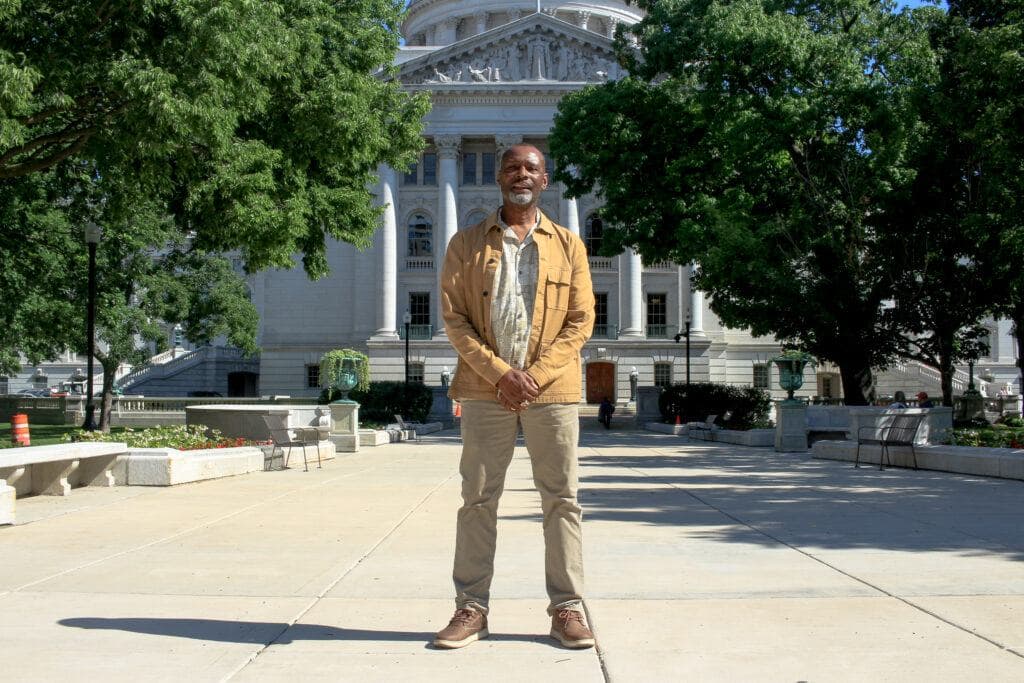
One of the eight appointees is Noble Wray, 66, a career police officer who served as Madison’s police chief from 2004-2013. He was a member of Gov. Evers’ Pardon Advisory Board from 2019-2025 where he reviewed applications, including asking applicants why they believed they merited a pardon. In an interview, he spoke with the Examiner about why he chose to serve on the commutations board and the unique perspective he brings to the role.
Why did you want to serve on the board?
“In total, I’m 100% in support of commutations,” said Wray. “I think it’s critical for the criminal justice system to have something like this in place.”
On the Pardon Advisory Board, Wray said he was inspired by stories of people who took accountability for their lives and were making meaningful changes.
“I’ve worked or reviewed just about every part of the criminal justice system during my career,” he said, “and nothing has been more personally fulfilling than the pardon board.”
He agreed to be on the Commutation Advisory Board, he said, because he believes people in prison who are trying to make constructive changes to become productive citizens should have an incentive to pursue those changes. He believes it’s important for the state to support successful reentry into society, focusing on employment, family support, treatment and accessing services.
“Being involved in criminal justice reform for so long and understanding that you can’t just look at a system that has punishment as its only motivation — human beings are more complex than that,” he said. “There are people that we know that can contribute to society, and the system, the structure must provide triggers, must provide systems to acknowledge those folks, both in prison and when they have completed their time.”
But he also acknowledged an applicant might not be ready for a commutation.
“I’m here to tell you, the first to tell you, it may not be for everyone,” he said. “It may be that someone just needs time to think through what they’ve done and to really grasp and understand it. It may be, you know, taking college credits. It may be working while they’re in prison on vocational training.”
What is the importance of the Commutation Advisory Board?
Wray emphasized that the advisory board brings together members from different backgrounds in the criminal justice and social services system, with diverse experiences, who will challenge one another and offer varied perspectives.
“So you know I support commutations,” he said. “But you know what? I am a cop. I’ve lived my whole life being a cop, and bottom line, I want to make sure that people in the community and out on the streets are safe, that neighborhoods are safe. So if I see something or hear something that I think is going to compromise that, I’m going to push back.”
At the same time, he added, someone who has a different perspective could see something he doesn’t perceive.
“What I hope we would get out of this is that we really hear what the people are saying that are requesting a commutation,” he said. ”And we really review the information and make the best decision, balancing the need to have a human being get back into Wisconsin society and make a contribution to Wisconsin society, balancing that with ensuring that no one will be harmed in any way, shape or form by this person.”
Asked about the pressure to ensure that the board doesn’t make a bad decision, leading to more harm caused by someone whose sentence is commuted, Wray drew on his experience as a police officer. It’s wrong, he said, to treat an entire neighborhood as being made up of criminals when only a few people are causing problems. He said the same standard should be applied to commutations, not letting one person’s bad actions ruin the chances for others who are trying to change their lives.
“Politically, people will get up and say, ‘Hey, this thing failed because one person did this,’” Wray said. “How sad is that when you can help others? Now, again, I understand you can’t place all of the emphasis on helping someone that has done something wrong to society, but if everything is totally punishment, you don’t have a balance” between punishment of the crime and rehabilitation of the offender. “That’s why the numbers stay the same, because you don’t have a balance,” he added, referring to Wisconsin’s prison population which is on track to break the record set in 2019 of 23,826 people behind bars, many more than the state’s prison system was designed to hold.
Asked if he knew how the advisory board would evaluate applications for those who meet the minimum criteria to apply, Wray said he thought it would be similar to the Pardon Advisory Board, but also noted that there is no official guideline yet.
“We’re supposed to come together and meet and discuss that,” he said, adding that he expects it will involve “exercising some discretion.”
What perspective do you bring to the Commutation Advisory Board?
Wray said his background in law enforcement and his work on other boards will inform his work on the commutation board.
“My common background being law enforcement, that I spent 30 years attempting to reduce fear, harm and disorder in the Madison area … that’s really, you know, where it starts,” he said. “I also bring a perspective of dealing with people at a level that probably no one gets to see other than a police officer, and that is in that hour of need, hour of distress, or when it happens, you’re out there … it’s that intimate time of a crisis or call or problem that very few people will see.”
He added that a police officer has to hold people accountable while also supporting and caring for victims, and “doing it with humility and with practical wisdom. I think that I bring that perspective.”
Wray also noted his experience consulting across the United States and internationally as an expert in police reform, police culture and implicit bias in policing.
“We don’t talk about this, but there is a financial cost to justice,” Wray added, “and if it’s not properly handled, if we’re too focused on arresting and incarcerating people, there is a cost, but there’s also a financial cost if we’re not doing the right thing by keeping communities safe.”
Finally, reflecting on his experience both in law enforcement and in his work on criminal justice reform, Wray said, “I just wish that more people could see when redemption is exercised properly.”
The seven other appointees to the commutation board include Maryann Sumi, a former Dane County Circuit Judge; David Meany, a former Ashland County District Attorney; Jerome Dillard, a criminal justice advocate and former executive director of EXPO (Ex-incarcerated People Organizing); Kathy Byrne Stilling, a former public defender, criminal defense attorney and retired Waukesha County Circuit Judge; Jonathan Scharrer, University of Wisconsin Law School professor and Director of the Restorative Justice Project; Geri Segal, the former executive director of Family Support Center in Chippewa Valley; and Kat Kasmaule, program and policy analyst for the Wisconsin Department of Children and Families and a former child protection case manager.
The eight will join chair Mel Barnes, Evers’ chief legal counsel, and vice chair Cindy O’Donnell, a corrections veteran.


