

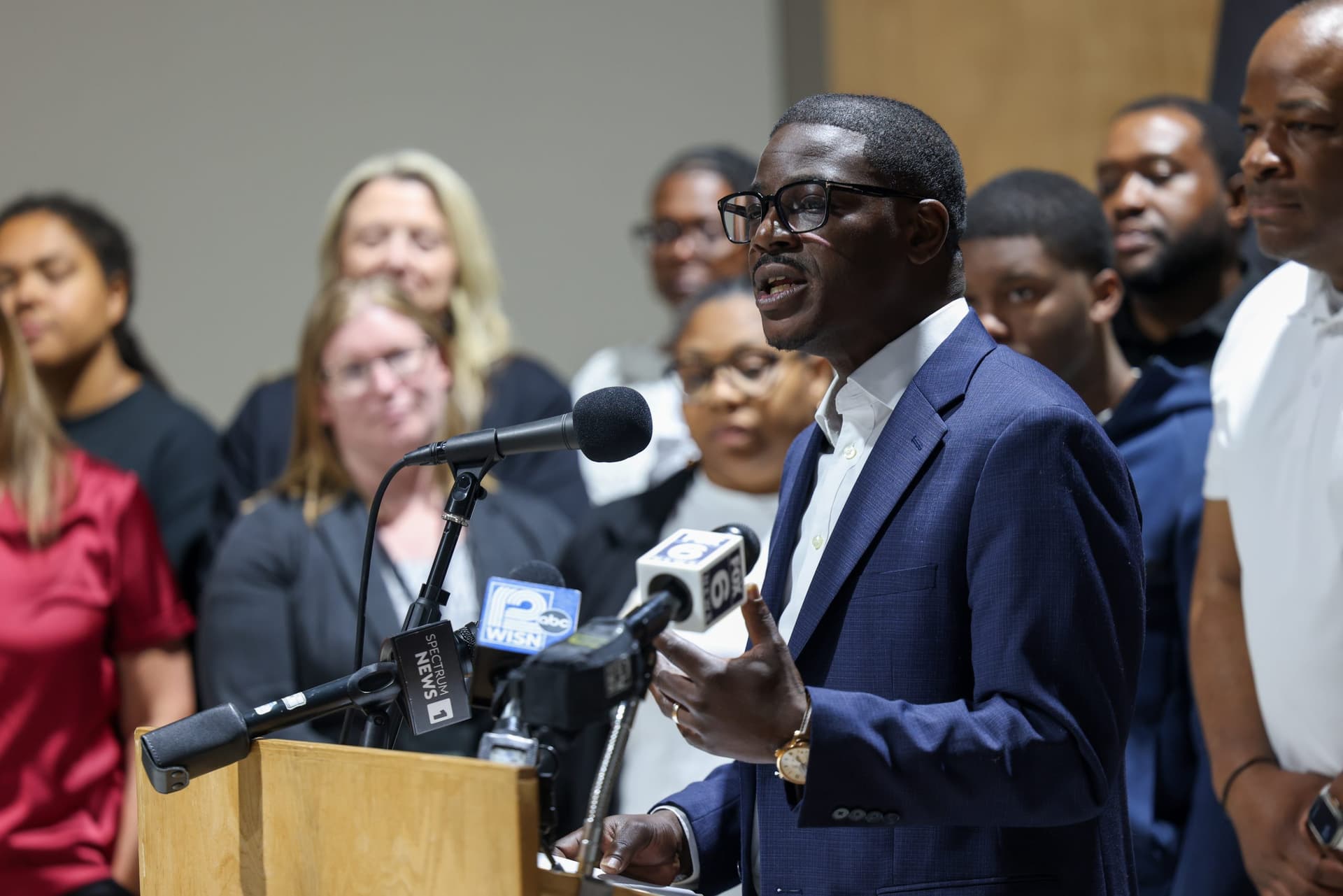


Kenneth Ginlack, chief executive officer of Serenity Inns, and Tahira Malik, founder of Samad’s House, both treatment and recovery facilities on the city’s North Side are on the front lines of the opioid epidemic.
Both are optimistic about a recent proposal to invest $7.5 million in Milwaukee County to fight opioids, but also cautious about where those funds will go.
“I would like to see more money invested directly into the Black and Brown communities and getting the money into grassroots organizations that can do the work with boots on the ground,” Ginlack said.

Malik, whose serves as chief operations officer for Samad’s House, a sober living facility for women, agrees.
“Although the overdose numbers are declining for the county, it doesn’t hold true for the Black and Brown communities,” Malik said.
She said these funds can directly impact Milwaukee communities.
“Everything is about providing the necessary resources so that education and needs are met,” Malik said.
Milwaukee County Executive David Crowley announced the proposal to use $7.5 million in opioid settlement funds to combat the opioid epidemic in the county in late June.
The funds are part of a larger multi-billion dollar national legal settlement against opioid manufacturers that helped to fuel the opioid epidemic. Wisconsin received more than $870 million as part of that settlement.
Of that funding, $111 million was earmarked for Milwaukee County from 2023 to 2041. The funds are to be used specifically for the issue of opioid addiction, education and fueling recovery efforts.
“By investing upstream in prevention, treatment and recovery services or harm reduction, this is making sure we’re providing the pathway for recovery,” Crowley said.
According to Crowley, the $7.5 million will support the implementation of eight programs. Initiatives include strengthening opioid and substance use education and treatment for justice-involved youth, increased medical examiner’s office staffing and medication-assisted treatment.
Decrease in overdose deaths

Crowley said the progress to address the overdose epidemic remains data-driven. Since 2022, there has been a 42.6% decline in opioid deaths across the board.
Yet, this decrease doesn’t paint the full picture. In 2018, American Indian, African American and Hispanic or Latino groups in Milwaukee combined for 35% of fatal overdoses. By 2025, that figure increased to 47.5%.
An NNS and Wisconsin Watch report found that older Black men, particularly those born from 1951 to 1970, have been most affected by the drug crisis in recent years.
“We know that African American men have been directly impacted, and we’re going to continue to invest in the programs and services to people on the ground who are doing the outreach and helping them on that road to recovery,” Crowley said.
Ginlack said how these funds will be used remains to be seen.
“I’m really hoping that more funds will go to those that are actually in need and make sure that they have access to services,” Ginlack said
Malik said the funding support can make a major difference.
“With pledging and being intentional with the money, it’s going to be able to change and save lives,” Malik said.
The Milwaukee County Board of Supervisors will take up the proposal later this month.
Jonathan Aguilar is a visual journalist at Milwaukee Neighborhood News Service who is supported through a partnership between CatchLight Local and Report for America.


