

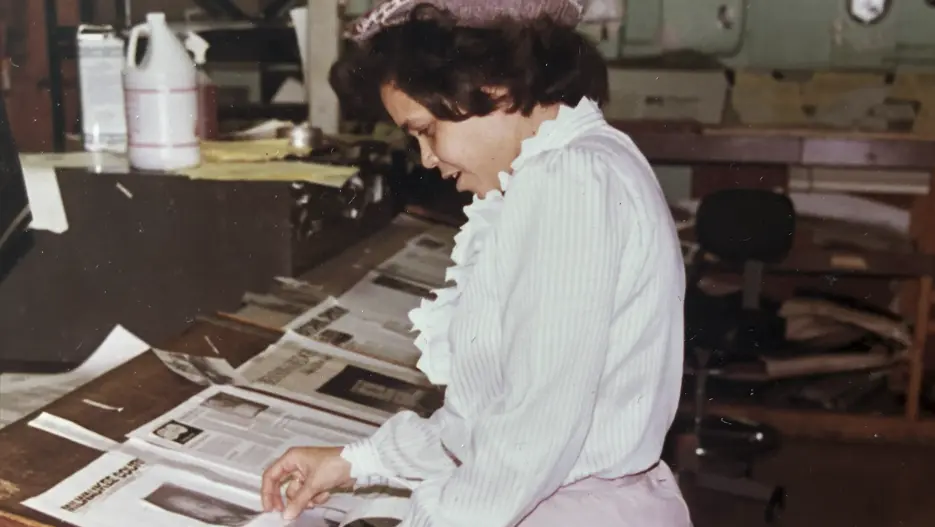
Source: Milwaukee Courier
‘We Need to Tell Our Own Story’: A Conversation on Juneteenth, Journalism, and the Importance of the Black Press
Jun 19, 2026, 6:17 AM CT


Share
For generations, Black newspapers have done more than simply report the news. They have documented community history, amplified Black voices, and advocated for change. For this year’s Juneteenth edition, I had the amazing opportunity to speak with longtime community advocate Carole Geary, who reflected on her life and journey from Chicago to Milwaukee and how those experiences shaped her lifelong commitment to Black journalism.
Before we moved into the interview questions, Ms. Geary shared her life story and her path into journalism.
“I was born and raised in the South Side of Chicago, and our family lived on 27th Street in a very rundown community. The community is now one of the most affluent communities of Chicago.”
She spoke about growing up in Chicago after her family moved to the far South Side.
“The stigma of the residents and the community has been erased since I lived there. No matter rain or shine, cold or snow, I walked to Shoop Elementary School.”
She later attended Moody Bible Institute for a short while, where she taught Sunday school, sang in the choir, became church secretary, typed the church programs, and operated a printing press. She also attended Chicago Vocational High School, where she graduated with double diplomas.
After getting married, she and her husband moved to Madison, Wisconsin.
“One day, my husband Cliff informed me we were moving to Adana, Turkey.”
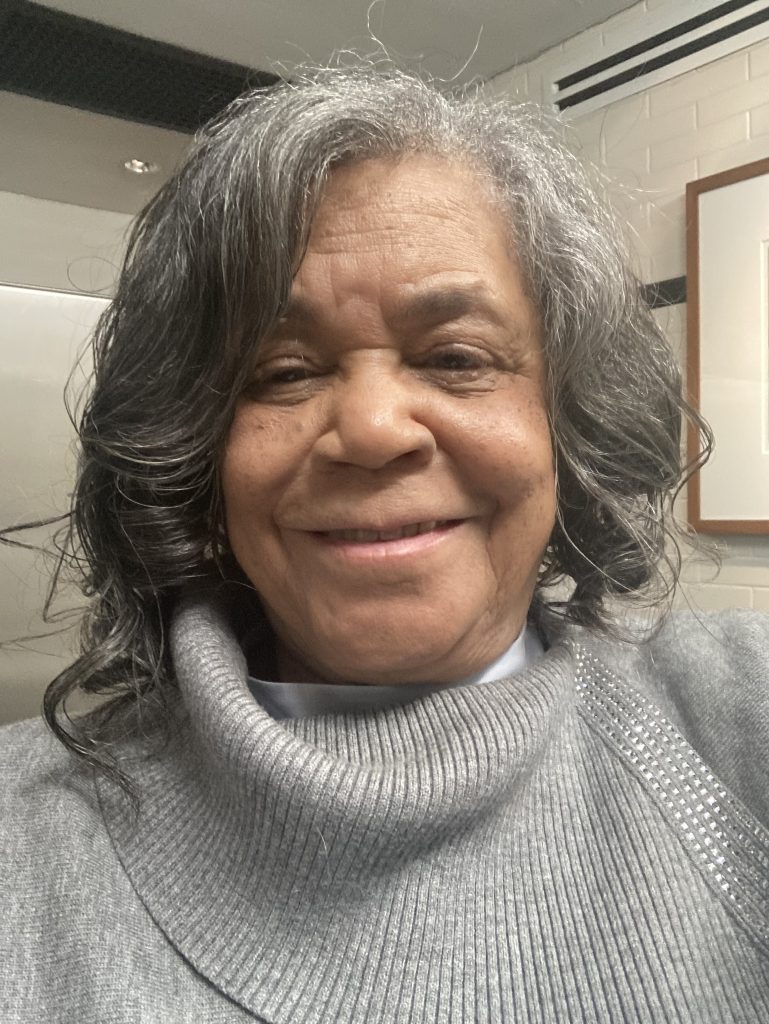
After living in Turkey for two years, they moved back to Wisconsin, this time to Milwaukee, because her husband wanted to attend the Milwaukee School of Engineering. She arrived in Milwaukee seven months pregnant and later gave birth to her daughter, Sharon.
Before connecting with the Milwaukee Courier, she held several positions throughout Milwaukee. She worked as a receptionist at a law firm in downtown Milwaukee, a receptionist at a nonprofit organization, and later became assistant to the director of the Concentrated Employment Program (CEP).
“Political infighting caused CEP to close, and I was employed as assistant to State Senator Swann.”
Ms. Geary is a graduate of the University of Wisconsin–Milwaukee. She also attended Marquette University’s graduate journalism program while working and caring for her daughter.
Finding the Milwaukee Courier
We talked about how she connected with the Milwaukee Courier.
“I eventually stopped by the Courier to see if I could be a freelance photographer to get experience for my classes in photography at Marquette University. I was given a press pass.
Well, the city job did not last very long due to misleading headlines in the Milwaukee Journal Sentinel. I stopped by the Courier to see if I could tell my side of the story and have the Courier print my version.
Mr. Jones, now Dr. Jones, advised me to move on and get my journalism experience at the Courier. I thought about it, no jobs, bills to pay, a daughter to educate and feed. This was my biggest challenge.
I said yes and started the next day working at the Milwaukee Courier Newspaper.”
The NNPA (National Newspaper Publishers Association) is an association of Black newspaper publishers across the United States. Established in 1940, it remains one of the largest and most influential Black-owned media organizations in America.
Q: You are a graduate of the University of Wisconsin–Milwaukee and have spent much of your career supporting Black journalism. What first inspired your commitment to the Black press?
“Jerrel Jones inspired my commitment to the Black press.
I always wanted to be an advocate for change. And once I got the ink in my blood and saw how powerful the printed word is, the commitment was there, and the creed of the Black press was the message.
I felt the need to be a part of the blueprint. We need to tell our own story.
That is the creed of the Black press, that we tell our own story.”
Q: Can you share some of the history of your involvement with the NNPA and the role it has played in advocating for Black communities?
“As publisher, I began attending NNPA meetings, the National Newspaper Publishers Association, which has June conventions held in member publisher cities, September conferences held in Washington, D.C., the National Newspaper Publishers Association Foundation events during Black Press Week honoring Howard University students majoring in journalism, and Midwinter Conferences. Which is always held in a warm city.
During the years Dr. Jones was active with NNPA, the old guard worked together to ensure the Black press was the voice of the community, especially when corporations discriminated in their hiring and advertising practices.
All NNPA newspapers would discuss issues facing the community and join together in campaigns. Major headlines across the Black press showed togetherness in supporting issues affecting Black communities, such as hiring and advertising.
For example, at one point every Black newspaper had the headline: ‘Choke on Coke,’ which was a very successful campaign. Dr. Jones was a major leader in the NNPA. And in the NNPA, we had meetings that would recognize owners and publishers’ newspapers with their mini-awards. And the highest award presented to the newspaper that I had to win that day was the Rushroom Award.
The NNPA experience taught me the value of speaking in numbers is very powerful.”
Q: Juneteenth is a celebration of freedom, resilience, and progress. What does Juneteenth personally mean to you?
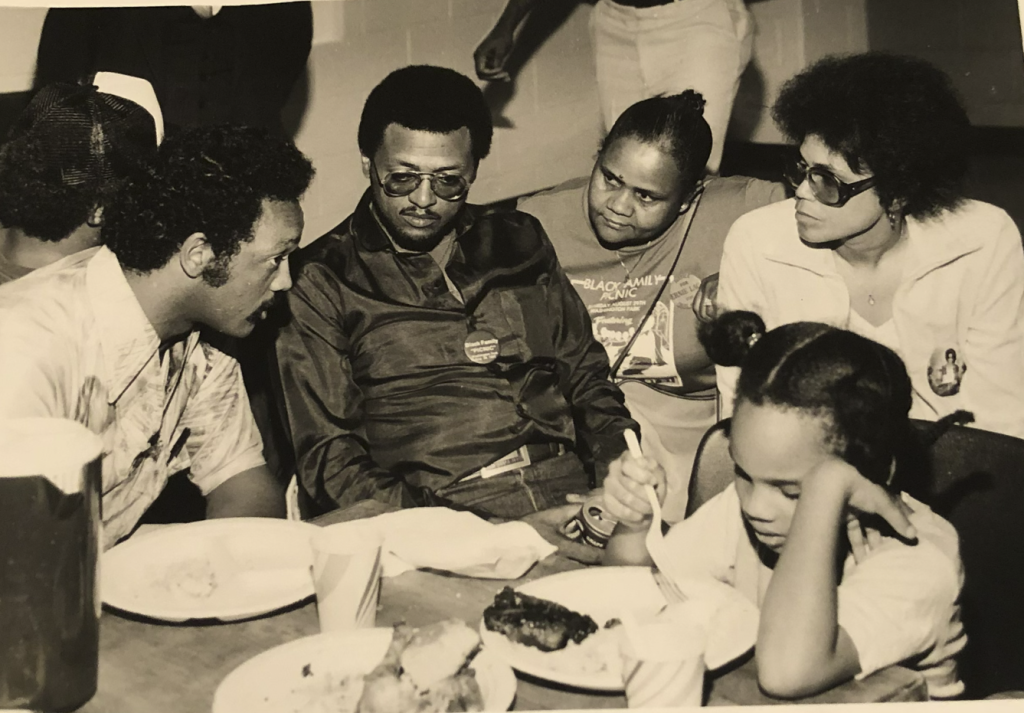
“I always looked forward to taking my daughter to 3rd Street, now MLK Drive, to be with a sea of Black people gathering as one family. The food and the anticipation of Dr. Jones bringing out the stretch red-and-white convertible Cadillac with the winner, Miss Juneteenth, sitting in the caddy, riding down 3rd Street; the crowd cheered for her.
Juneteenth means freedom, resilience, and progress for the Black community and has become more inclusive for all communities.”
Q: Looking back, what stands out most in your memories of Mike McGee Sr., and what impact do you believe he had on Black political engagement and presence in Milwaukee?
“Mike McGee was one of many voices for our community.
Once McGee, Carl G., and Jerrel Jones became a team, Milwaukee was a positive force in the Black community that the establishment in Milwaukee was determined to destroy.
Their message to the Black community was powerful when it came to determining our own destiny as a people and as a community. That’s what their message was.”
Q: What message would you like to share with younger generations about preserving Black history and supporting Black-owned media?
“The young generation has so much technology at their disposal, including AI, they believe reading news online from Black writers and news feeds.
It is supporting Black media.
I wish I had the solution to combat the technology that influences our younger generation not to pick or subscribe to newspapers and listen to Black-owned radio stations more frequently.”
Q: What concerns you most about the future of journalism, and what gives you hope?
“The perception that Black newspapers will not be around, advertisers’ online buys, corporations taking our spending power for granted, and young people having so much noise around them and are losing hope that Black newspaper employment cannot be a viable and sustainable income.
And my hope is that one day, we’ll get back to knowing that this is a sustainable and viable income to be a part of the Black Press.”
Q: With all of the important and impactful work you have done over the decades, how were you able to navigate and persevere in those spaces as a Black woman? What challenges did you face, and what gave you the strength and determination to continue your work?
“My challenges were many while being a single mother and being passed over for many positions because I am a woman and because of the color of my skin.
The opportunity came when Dr. Jones recognized the many talents of people who worked for and with the Courier, especially the many leadership talents Jones allowed to flourish.
Many of the staff operated businesses while working for the Courier.
The businesses started by me, with support from Dr. Jones, was an African American tourism company, Park Travel Agency; a Midwest Regional Advertising Agency; and a Courier Communication business, ecetera.
With the support of the Courier and family members, it gave me the determination to continue the work that needed to be accomplished.
I watched and studied our leaders and the positive impact they had on our communities.
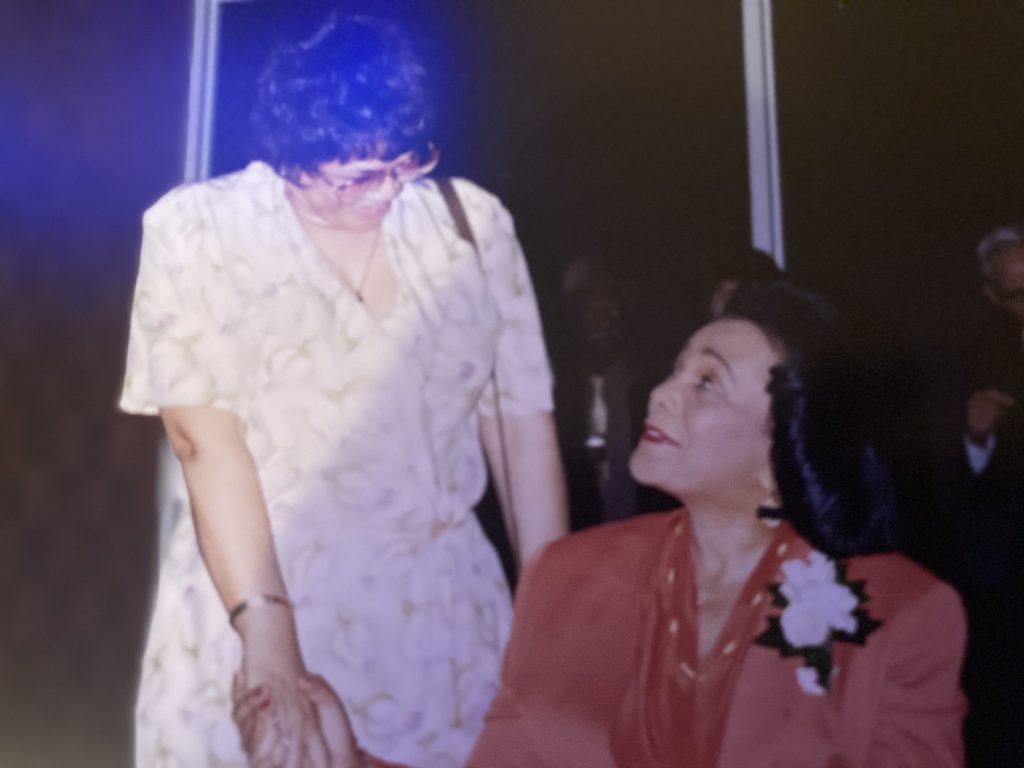
I came along during the era of street singers, Motown, Jesse Jackson, Michael Jackson, Farrakhan. Dr. Leon Sullivan, founder of OIC (Opportunities Industrialization Centers), who made many visits to the motherland.
I was on the plane when we arrived in Africa, and Dr. Sullivan said, ‘They took us away, piled in ships through an opening with writing above it that said, ‘that we shall never return.’
Sullivan stated, ‘Not only did we return, we came by air and not like we left, in the bottom of ships.’
I visited several African cities while employed by the Milwaukee Courier, and my strength and commitment came from my connection to the motherland. Seeing both the poverty and destitution also the wealth in those countries gave me the fortitude to be a force to honor the Black Press Creed.”
The Black Press believes that America can best lead the world away from racial and national antagonism when it accords to every person, regardless of race, color, or creed, full human and legal right, hating no person, fearing no person; the Black Press strives to help every person in the firm belief that all are hurt as long as anyone is held back.
“The Black Press was started out of a need to tell our own story and not let it be told by other media outlets.”
Become an Advocate for the Black Press: Pick up the Milwaukee Courier weekly and listen to WNOV Radio Station daily.

Want More Local News?

Civic Media
Civic Media Inc.
The Civic Media App
Put us in your pocket.


