

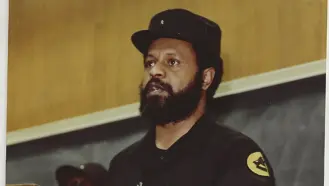
Source: Milwaukee Black Media Trust
As he faces terminal cancer, Mike McGee Sr. reflects this Juneteenth on his lifetime of fighting for Black Milwaukee

Jun 19, 2026, 6:05 AM CT


Share
It was Jan. 15, 1970 — Dr. Martin Luther King Jr.’s birthday — when a young Army medic, Mike McGee Sr., and his platoon came under heavy gunfire from enemy forces in Vietnam.
McGee was waiting in a medical bunker somewhere in the Vietnamese jungle when a fellow soldier was suddenly struck by gunfire about 200 yards out and needed medical attention.
It was now up to McGee to leave his post, maybe to never return, and render aid to his comrade. But after running through the gunfire to reach the downed soldier, he encountered a big surprise upon arrival.
The distressed wounded soldier was Miller, a known racist that had Nazi symbols as tattoos.
McGee thought about leaving him there, even turning around as Miller cried out for help.
“I thought about just leaving his ass there, but my conscience said I couldn’t do that, so I picked him up, put him on my shoulder and told him if you make a sound, I’m dropping you,” McGee told the Milwaukee Courier in recent days.
Off McGee went with a grown man on his back, running about the length of two football fields, taking on enemy gunfire.
But McGee made it back to the bunker safely, rescuing Miller in the process.
Miller was then flown out of the jungle by helicopter and McGee never heard from him again.
An Army general witnessed the rescue mission and awarded McGee the Bronze Star Medal for his heroic actions.
Some time later, McGee returned home to Milwaukee for good and joined the Black Panther Party beginning a decades long career of community activism, public service and notoriety that no one in this city has rivaled till this day.
The now 76-year-old McGee, who moved to North Carolina in 2016, spoke with the Milwaukee Courier in recent days to help document his impact on the city as he publicly states that he has an upcoming meeting with God soon.
After beating prostate cancer, McGee was diagnosed last year with a rare form of bone cancer, which has no cure.
“It’s like everything else in my life. I’m a fighter. I don’t quit,” he said. “So, I’m just enjoying the last days of my life with my family. My only regret in life is not spending more time with my family.”
Several Black former officials who worked closely with McGee also spoke with the Courier to help get a fuller picture of McGee’s public life and put it on paper.
McGee and his family are well-known in Milwaukee’s Black community, and to older millennials and above, but because most of his direct impact happened a generation ago, there are many young people that are just hearing about McGee for the first time.
A man of profound statements, when asked what he would tell young people celebrating Blackness during this year’s Juneteenth holiday, McGee was clear.
“There’s a war going on in the Black community. We are fighting each other. And it’s time for us to stop the internal turmoil,” he said.
McGee points to the tens of thousands of young Black people that die in shootings in the United States every year.
“We are committing a Holocaust against ourselves,” he said.
But McGee said change will happen in Black America in due time because our people always overcome.
“I think it could happen because there’s got to be one place that it happens in and then it will be a model for the rest of the country,” he said. “People will have a hard time listening but after we get tired of suffering we will then open our eyes, join together and try to solve our problems.
“That’s what I tried to create in Milwaukee.”
While in Vietnam, McGee prayed to God that if he let him survive heavy fire one night, then he would commit his life to the service of Black people back home.
“I think I fulfilled my promise,” he said. “And now I’m passing the torch.”
The struggles of Milwaukee’s Black community and its north side neighborhoods, whether economically or through education or while finding justice, have long been documented in media and studies. That is news to no one living in this historically racially segregated city.
But our struggles were never more known around the world than when McGee was our leader.
“The evidence and the blueprint is right there before people,” he said. “Someone has to take it up and bring it to life.”
Mike McGee threatens a race war in Milwaukee and becomes world news
Born in the Deep South, McGee was a powerful figure in Milwaukee’s Black community for over 40 years. His thunderous voice would reverberate in ghostly City Hall and over the radio airwaves.
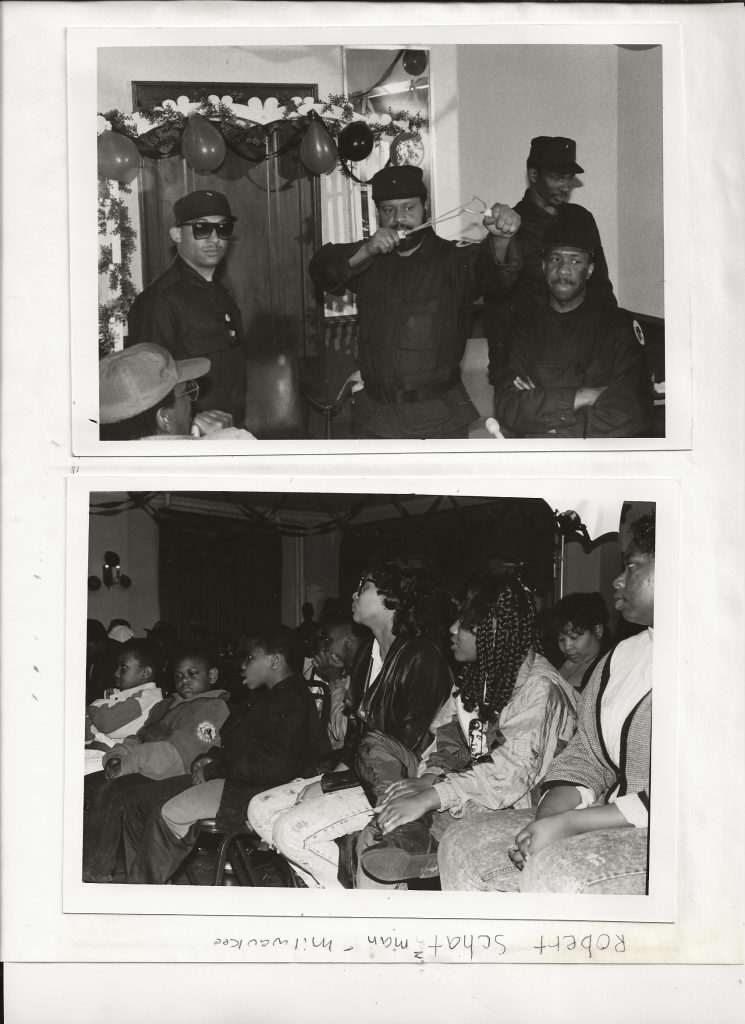
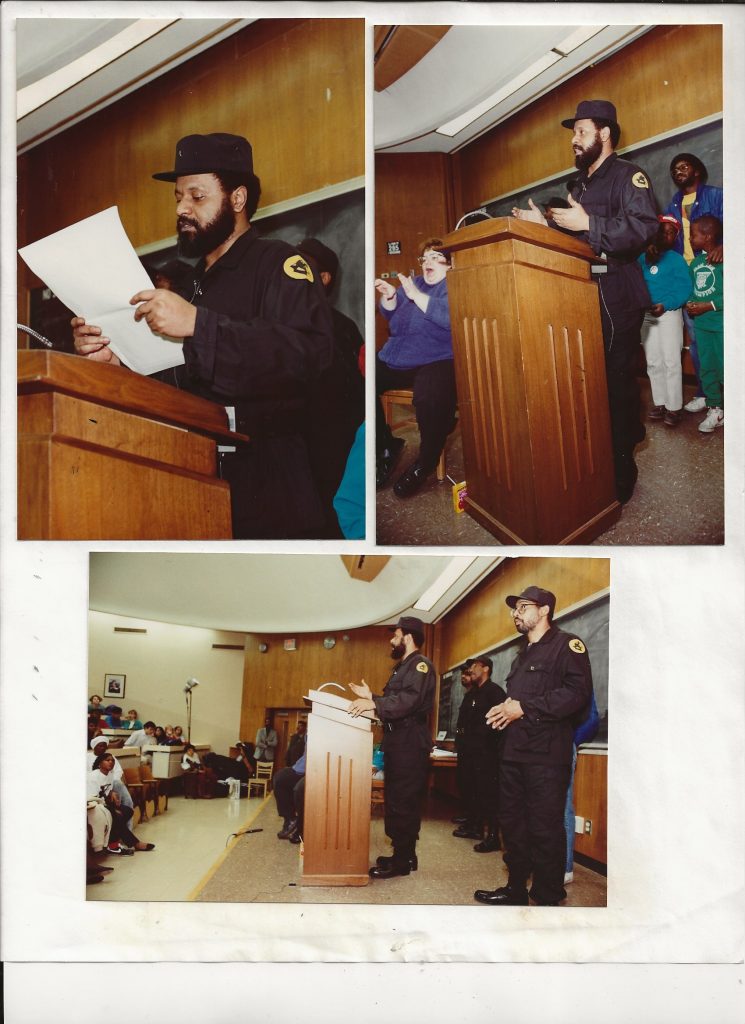
Starting in the late 1980s, McGee began proclaiming the start of a race war in Milwaukee was coming. While a sitting alderman, he started the new Black Panthers militia, and threatened an armed struggle if social and economic conditions didn’t improve on the city’s north side.
“We’ve done things the nonviolent way, and it hasn’t gotten us anywhere,” McGee told The New York Times in 1990. “The only way to get respect is to be willing to use violence. We either stand there with our backs to the wall or fight our way out.”
”I’m not advocating what the Black Panthers were advocating,” McGee added, recalling that the Black Panthers advocated for self-defense, not violence, and promoted community social programs. ”Our militia will be about violence. I’m talking actual fighting, bloodshed and urban guerilla warfare,” he said.
McGee made a speech that week to a crowd of about 350 people. He said his militia, “rather than resort to violence, would work to keep streets safe and clean,” but added that an armed struggle was necessary within five years if quality of life didn’t improve for Black people.
The comments had many white Milwaukeeans shook. “He scares people,” said Thomas Donegan, the president of the Common Council at the time. “There’s a sense of outrage that anyone would dare threaten to use guns.”
But, in 1990, McGee stuck by his ultimatum — invest $100 million into his district, like the city did to improve downtown, for a job program for teens or he would call for violence. McGee trained soldiers in violent acts to overthrow Milwaukee’s government unless the funding wasn’t received in five years.
With that deadline in mind, McGee had the militia organize community social programs in the meantime and work to remove drugs and decrease violence in north side neighborhoods, all while preparing Black residents for a revolution of Milwaukee’s white establishment.
Mayor John Norquist, a one-time ally of McGee’s, called for the alderman’s resignation and was secretly plotting McGee’s demise from then on out.
At the same time, hundreds of Black Milwaukeeans moved to join the militia.
McGee and his Black Panthers never followed through on the threats, but his actions led to support from people of all backgrounds and he received international attention. He appeared on national talk shows like “Jerry Springer,” “Montel Williams,” “Phil Donahue,” “Geraldo Rivera” and “60 Minutes.”
An unspoken occurrence is that McGee is also responsible for the now common talk show brawl format on daytime TV. McGee is the first person to assault someone on the “Jerry Springer Show” in 1993. He attacked a white supremacist who said all Black men are pimps and all Black women are whores.
For better or worse, Google searches for McGee Sr. will inevitably lead to his “Springer” fight, but Mike McGee Jr., a former alderman himself, says it’s a positive thing because millions will want to know more about his father.
“Recently on social media, like a million people or so saw him fighting a Klansman on ‘Jerry Springer,’” McGee Jr. said. “He’s a pioneer and a lot of his work is overlooked.”
McGee Jr. would like to see the Milwaukee Common Council move to rename a street after his father. “I’m sure one day that would happen, but it would be good if people recognize that while he’s on Earth,” he said.
McGee’s explosive appearance on “60 Minutes” amid the race war comments is said to have left one of the strongest impressions on one of the program’s original correspondents, Mike Wallace.
Glenn Mattison, former legislative aide to McGee, was responsible for coordinating the arrival of Wallace and his team as the CBS crew had two segments focused on Milwaukee, a rare step.
“Wallace said something that was heartfelt,” Mattison said. “I thought he really meant what he said at the time. I was sitting there and he told (McGee) that he had never seen anybody have this impact on the community and Black people since Malcolm X. And he knew Malcolm X personally.”
As a result of the publicity, the phone lines were always busy at the alderman’s office at this time. “We got calls from all over the world, South America and Europe, these people would call me like (McGee) was their representative. It was just amazing,” Mattison said.
Oppressed Mississippi boy turned Army medic and Black Panther
McGee represented the poorest district in the city. He was first elected to the Common Council in 1984. His background as a war veteran and role in the Black Panthers helped catapult him to a leadership position in Milwaukee’s Black community.
But his support for the family of Ernest Lacy would finally secure his electoral victory. The 22-year-old Black man was brutally beaten by Milwaukee officers and died in the back of a police van after being arrested for a rape that he did not commit, sparking outrage in the community.
Soon, McGee became one of the main faces of a movement to see a form of justice for Lacy’s family. Many times before, McGee had brushes with death of his own and was cracked down on by authorities, but he persevered and lived to tell the story.
He was born in Corinth, Mississippi, on April 5, 1950.
McGee, alongside his mother and two brothers, moved to Wisconsin in 1963. He never knew his father and his mother, Geneva Jackson, told Milwaukee Magazine in 1989 that she bore McGee at age 15, the victim of “a form of rape.”
McGee said growing up in the South left a profound impression on him as a young boy. He once recalled being shot at one Halloween night by a gang of roving whites. One friend was killed in the incident.
Once in Milwaukee, McGee attended Rufus King High School, where he was an above-average student and played football. After graduating in 1968, he joined the Army, and witnessed the horrors in Vietnam.
“It really had a tremendous effect on him,” his mother said to Milwaukee Magazine. “The Michael we knew that was gentle and sweet and kind was cold and seemed indifferent.”
In 1969, McGee’s wife Penelope gave birth to the first of seven sons and two daughters, Mike McGee Jr., who served on the Common Council from 2004 to 2008.
Junior also had a controversial tenure in office before an arrest in 2007. Despite that, McGee Jr. won his primary election from jail but lost the general election for his re-election.
While a radio personality for the Milwaukee Courier’s sister radio station WNOV, McGee Sr. publicly stood by his son as the justice system came down on him. McGee Jr. even later spent seven years in prison. But privately McGee Sr. wanted nothing more than to break into the jail and “kick junior’s ass himself.”
Meanwhile, McGee Sr. said he considered running for office again if his son was unable to. He said white Milwaukee was targeting Black residents, including members of his family.
“I can’t stand any Black person to be treated that way, much less my son,” he said at the time.
As a young member of the Black Panthers, McGee Sr. helped build community and provided free breakfasts to Milwaukee school children.
In 1976, he ran for Common Council, challenging Ald. Orville Pitts — the first Black man elected to the council in city history. However, McGee placed third in the primary. He ran for alderman again in 1980 and lost. Then, Lacy’s death happened.
Dr. Howard Fuller, civil rights and education reform activist who later became superintendent of Milwaukee Public Schools, would stand alongside McGee and be covered extensively by local media, including on the TV news nearly every night, as they demanded an investigation into the death.
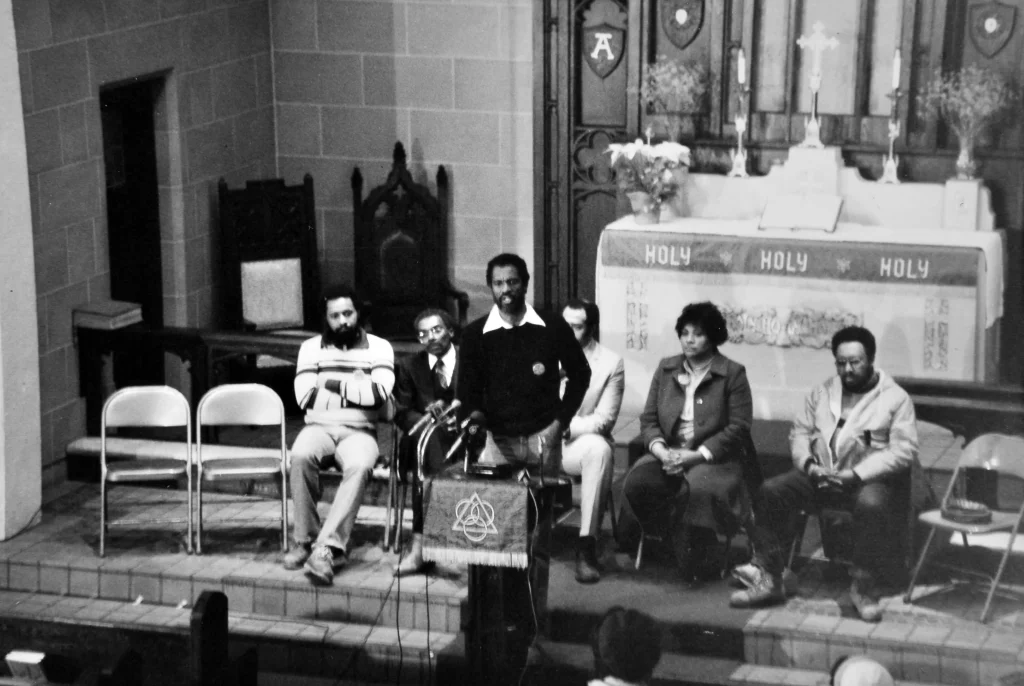
“Lacy was murdered by the Milwaukee Police Department,” Fuller told the Courier in an interview.
Fuller and McGee joined forces to build a coalition in the Black community that helped fuel some change. The two Black heroes were at odds at times, but knew it was bigger than themselves.
“We had an agreement that we weren’t gonna let people separate us,” Fuller said. “If somebody said something about Mike, I was gonna tell Mike, if somebody said something about me, he was gonna tell me. And so we talked every single day.
“But one night we were driving and Mike said, ‘You know I shouldn’t be meeting with a nigga like you.’”
The men had disagreements on what’s best for the Black community, plus Fuller believes McGee might have resented his college degrees as he was a doctoral student at Marquette University at the time.
“But you know, we were able to work closely together to try to get something done,” Fuller said.
In 1983, the Ernest Lacy Law passed the Wisconsin State Legislature, making it illegal for authorities to fail to render aid. Police were convicted of failing to render aid to Lacy and Lacy’s family ultimately won a $600,000 settlement in court.
After receiving more acclaim and recognition from Lacy’s death and subsequent criminal hearings, McGee sailed to an electoral victory for a Common Council seat.
Black Milwaukee’s rabble-rouser at City Hall
McGee was at first effective at generating resources for his district during his early years at City Hall. He was instrumental in getting the Center Street Library and Fondy Farmers Market built and he proposed a gun buy-back program to get illegal weapons off the streets. McGee said he was most proud of creating a basketball league for Milwaukee youth.
He also proposed the “decentralization” of the police department, recommending a community board for each police district.
“There’s things that can be done,” he said. “If you had elected officials that were interested in creating some change. I don’t care if their feelings are hurt, but all they do is collect a check.
“Every two weeks, they get their check, they enjoy their money that they make, including the Black mayor of Milwaukee, including the County Board. All they do is collect money off our misery and they don’t attempt to do anything creative in our community.”
Back in his day, McGee railed against officials pushing aid to update downtown Milwaukee, when north side neighborhoods need investments desperately, and for spending money on updating stadiums.
He eventually grew weary after repeatedly speaking out about racial injustice in the city and not seeing action from his colleagues. He generated many opponents but also had many allies.
Mattison, a Milwaukee native, describes the city, to be frank, as being a racist, miserable place in the late 20th century that has made improvements and some of that success can be attributed to McGee.
“Milwaukee has always been a hyper-segregated place, but it’s better now,” Mattison said.
“I remember some of the housing marches when you had people like Dr. King and Father James Groppi, they were marching for open housing and every time you crossed that viaduct to the south side, it was pretty rough. People were calling you all kinds of racist names.
“But during (McGee’s) time, I couldn’t tell you how many people, white people, older folks that were pretty prejudiced were saying, ‘You know what, I don’t like that guy (McGee) but I respect him for standing up for his people and he’s not my alderman but I was wondering if he could help me out?’”
In 1987, McGee proposed that his district and other predominantly Black districts secede from the city of Milwaukee and form their own community. The next year, he famously wore a brown paper bag over his head for the official photo of the 1988 Common Council, saying he was disappointed in his fellow aldermen following budgets cuts to health and fire protection, among other concerns.
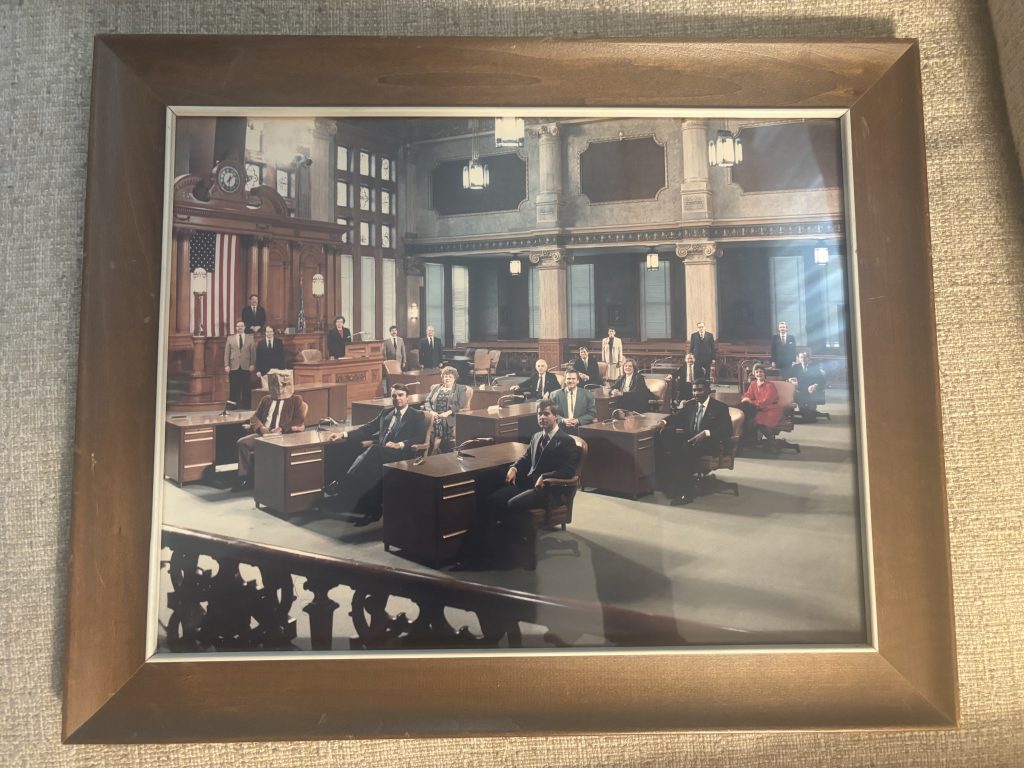
“I was just ashamed of what’s happening with the city of Milwaukee and America,” McGee said. “I didn’t want to be seen with all of them for one thing, but also for the rest of history there’s this mystery guy with the bag over his head.”
“They tried to trick Mike from taking the photo,” Mattison said. “They had to give him two hours’ notice, so Mike carried the bag in his back pocket everywhere he traveled. I don’t know if the photo is hanging at City Hall anymore.”
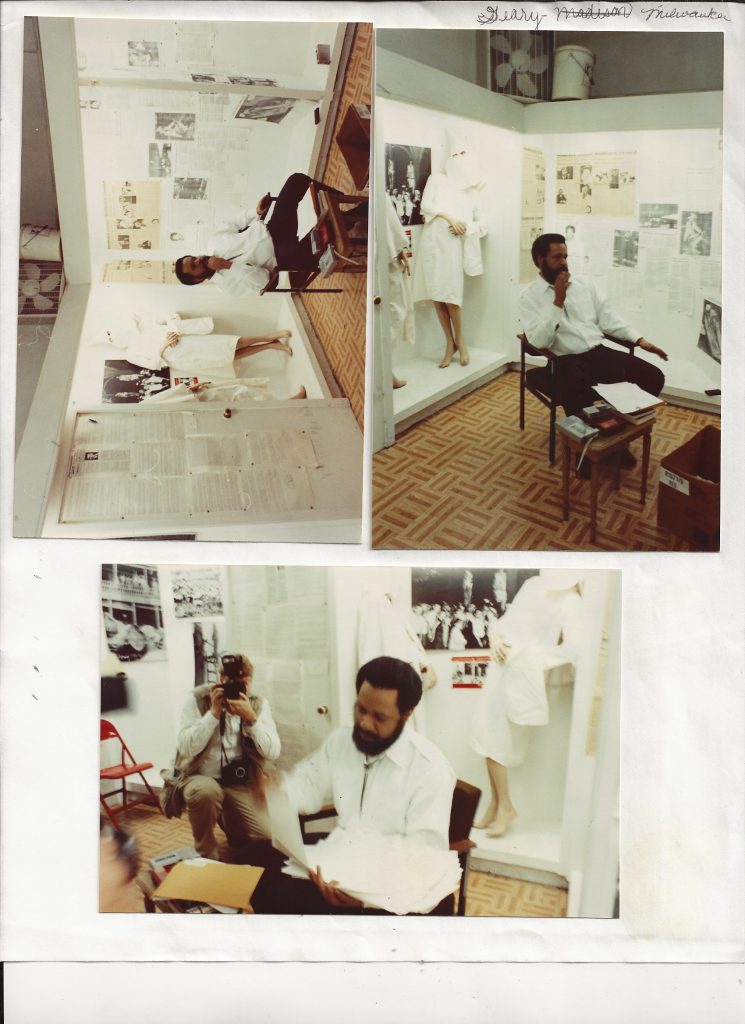
McGee was a fan of the public stunt if it meant drawing attention to the plight of his constituents. To symbolize racism, he subjected a Black baby doll to a lynching in the City Hall rotunda during the Christmas season. He interrupted a live taping of “Good Morning America” from Milwaukee’s lakefront by jumping on stage and attempting to take the mic from Charlie Gibson. He spent a night in jail for that.
He also incessantly blew a whistle at Dr. King’s birthday celebration in the Performing Arts Center and disrupted a Habitat for Humanity event featuring former U.S. President Jimmy Carter.
“(Carter) smiled the whole time and shook (McGee’s) hand. You could see it in (Carter’s) eyes, he understood,” Mattison said.
McGee triggered the recall of Usinger’s sausages because the company opposed renaming a stretch of Old World Third Street to King Drive, which eventually happened in 2022. That situation earned him the first censure of an alderman in the then-140-year history of the Council following several failed vote attempts.
McGee provides multiple reasons for the stunts, including the suffering of Black Milwaukee related to two issues that are still all the more prevalent today.
First he starts by pointing to the history of police shootings in Milwaukee, going back to the 1967 police shooting of UWM student Clifford McKissick. During his time, McGee encouraged a riot to flip a police cruiser following multiple police shootings of a Black males.
“The list grows longer and longer of them killing Black people,” he said. “The problem was basically an occupied force. I’ve been in Vietnam, I know what an occupied force is. That’s basically their job is to suppress Black people and keep us in our place”.
McGee was also arrested and spent time in jail for burning tires on Interstate 43 because he wanted to bring awareness against freeway construction dividing neighborhoods and further displacing and weakening Black communities.
“They were driving straight through our neighborhood and polluting it with lead from all the cars on the freeway,” he said. “Driving from where they lived into the city. And basically everything that was happening was about their pleasure, their fun and their liberty. And we were suffering and dying. They were just determined to make our lives as miserable as possible.”
McGee also hilariously said the stunts were about inconveniencing white people as much as possible.
“There’s the right to life, liberty and the pursuit of happiness,” he said. “And basically white people in the city of Milwaukee were into the pursuit of happiness. And I tried to do everything I could to make them as unhappy as I possibly could. So everything that I did was to make them unhappy.
“They have Summerfest, (the Rubber Duck Regatta), baseball games, basketball games,” he said. “They are basically enjoying their life while we are suffering.”
One significant stunt did inconvenience himself legally, though. McGee said he would egg the old Great Circus Parade unless a jobs plan was created, which earned him a court injunction that he must stay blocks away.
But for as much as the forces that be played games with McGee, he knew how to play them right back. The parade threat earned McGee and Mattison police escorts.
Mattison, McGee and friends would swap clothing items to throw off the police.
Mattison said “another guy came out the municipal building on Market Street with (McGee’s) hat and coat on,” and police tailed him to the Council chamber. “Meanwhile, (McGee) met his wife at another exit so they could go grocery shopping for the kids together,” he added.
“When I tell you I was laughing so hard,” when police confessed they lost him.
The old Milwaukee mayor plotted to get Mike McGee out of public office
Tired of the grandstanding and after sustained scandal and recall attempts, McGee gained many enemies in the media, white Milwaukee, and the mayor’s office. He lost his seat after two terms, losing to a Black police sergeant, George Butler, who was endorsed by Norquist.
McGee helped get Norquist elected by improving his Black support, but Norquist ultimately turned his back and began plotting the end of McGee’s tenure.
“A demented mind,” is how Norquist described McGee at the time.
The first Black man to ever serve as acting Milwaukee mayor, Marvin Pratt, was an alderman during this period.
The 82-year-old also has his own health challenges, including a declining vision, but said in an interview with the Courier at his north side home that he still manages to call McGee every couple weeks to discuss life, family, health and their time at the helm of the city. The friendship had highs and lows, but they never publicly disparaged each other.
Pratt said that although the threat of violence was Norquist’s final straw, McGee had been upset with the mayor for some time.
McGee and Fuller played a major role in getting Norquist elected by turning out the Black vote in the 1988 election for Norquist.
Following 28 years of Henry Maier as mayor with just one Black person appointed to a cabinet position, Norquist vowed to have a diverse cabinet and McGee and Fuller had people in mind.
“I’m not saying that to sound real crude, but that’s how (politics) goes,” Pratt said.
However the working relationship quickly spoiled when Norquist appointed some of Fuller’s suggestions but none of McGee’s. Norquist also continued to avoid McGee’s legislative agenda.
“That really pissed him off,” Pratt said. “And rightly so.”
“To Norquist’s credit, he did open city government where you had Black folks in certain positions where they had never been,” Pratt said. “So I thought he did well in that regard. Norquist was forward thinking in a lot of ways, but (McGee) was a force. You couldn’t take him lightly.”
McGee’s second term was spent at odds with the mayor’s office. Mattison had to pick up the slack as he had a working relationship with Norquist, someone who he played pickup basketball with.
But the writing was on the wall and Black officials from that period say Norquist applied a heavy hand during redistricting following the 1990 census. Maps were redrawn completely reshaping McGee’s district and removing much of his Black support in segregated Milwaukee.
The council absurdly changed the north-south orientation of the district to east-west, pulling in more white people and upperclass Black people near Sherman Park who didn’t necessarily agree with McGee’s agenda.
“Redistricting is done by the Common Council but the mayor had allies on the council,” Pratt said. “They cut off the lower end of his district. They added more whites than there were before and that was enough to tip it. And that was the end of Alderman McGee.”
He ran for County Board of Supervisors in 1994 but lost to a Norquist-backed candidate again.
“(McGee) was always focused on his people and upward mobility but I thought his anger, based on what he thought wasn’t happening, could at times get the best of him,” Pratt said. “It’s easy to say he could have taken a different approach, but he took the approach he was comfortable with.”
However, McGee said he doesn’t care that he lost his seat because he still had his voice.
“They took the seat from me,” he said. “But I had certain principles that I went by and I didn’t really care and that’s why I started my career in radio.”
Mike McGee’s radio show ‘took no prisoners on the air’
In his later years, McGee may have been even more outspoken while a radio host on Black-owned radio station WNOV, which today is part of the Milwaukee Black Media Trust.
The late Dr. Jerrel Jones, the founder of the Milwaukee Courier and then-owner of WNOV, provided an outlet for McGee to continue his work and remain a voice in the community.
“After they changed my district, they decided they were gonna run me and my family out of Milwaukee and that’s when Mr. Jones came to me and said there’s another career for you,” McGee said.
During his first two years on the radio, McGee hosted the “Carter-McGee Report,” a call-in radio show, with Richard G. Carter until 1995. It was the dynamic of Carter, a longtime Milwaukee print journalist, and McGee, a radical Black militant, that made the show a hit. Notable Black figures around the country made it a point to stop by the show when in town.
“To many Milwaukee whites and casual tuners-in, Carter and McGee were a surprising radio talk show duo — acid-tongued, yet different Black broadcasting pals who clearly liked each other, and took no prisoners on the air,” wrote Carter in a 2023 column for the Shepherd Express.
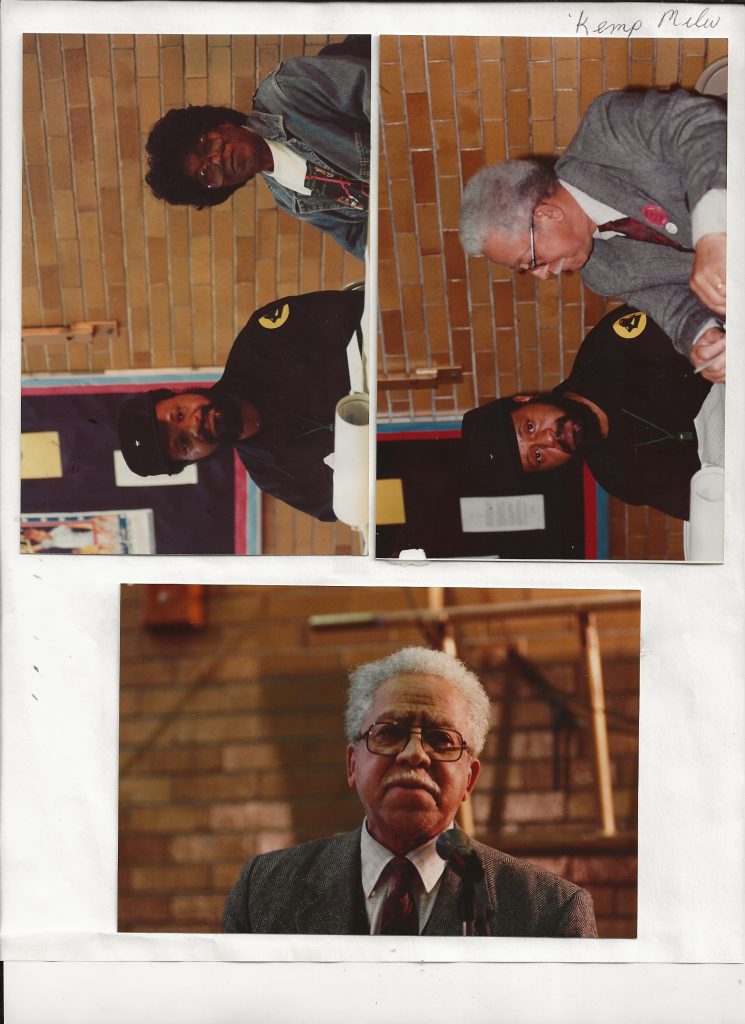
“We discussed hard, sobering facts of black life in the city to a broad range of Milwaukeeans, providing positive information on one hand, and pulling-the-covers-off some bad actors on the other.
“Indeed, ‘The Carter-McGee Report’ dealt in the real, not the imagined. We kicked ass and took names and did it with style. Those we offended deserved to be offended. This is the essence of thoughtful, albeit in-your-face, talk radio, run by caring men and women experienced in life.”
McGee then hosted “The Word Warriors,” a program alongside Tejumaloa “Teju” Ologboni, touching on political issues for roughly 20 years.
In 2007, McGee was pulled from the air for deriding the mother of former conservative talk-radio host Charlie Sykes after she died in a house fire two days earlier.
But of course, long before then, McGee Jr. had announced he’s running for mayor from the City Hall lobby in 1991 to challenge his father’s foe, Norquist. What followed was two more decades of Milwaukee’s most pivotal political and societal moments grazed by the McGee family.
Clayborn Benson covered McGee as a photojournalist before founding the Wisconsin Black Historical Society and Museum in McGee’s old district. Benson wrote in a paper of McGee Sr. that many, even some of his supporters, held views that McGee was too extreme and his methods had its disadvantages, but given today’s political climate it only helps McGee in how people view his life and his accomplishments.
“The division between Black and white was far too large and still is today,” Benson wrote. “But instead of sitting there accepting the treatment they had been given, Black people joined him and demanded more.”
McGee is a firm believer in working toward a more perfect union. His love of country was his main passion.
“Back in the day, everybody was trying to avoid the draft, including (President Donald Trump)” Mattison said.
“But Mike enlisted. He always felt — and said this on the Common Council floor — I’ve always done everything that was supposed to be done, that was right, and I had nothing to show for it. Excuse me if I choose to function outside the parameters.
“And he always felt he gave his all to this country and his country never reciprocated in kind. And that’s what drove him more than anything.”
Mattison fought back tears discussing his old friend McGee who he went to war with in Milwaukee but hasn’t spoken to a lot since McGee moved away.
“Me and Mike went through a lot,” Mattison said. “It was rough.”
“But Michael McGee Sr. was committed to the Black community and he loved America.
“He’s a soldier at heart.”
Related Stories:
- For every Mike McGee Sr, there is a Marvin Pratt
- ‘I love Mike McGee’: Howard Fuller reflects on friendship, conflict and legacy
- “We Need to Tell Our Own Story”: A Conversation on Juneteenth, Journalism, and the Importance of the Black Press
- Mike McGee Sr.: Milwaukee has more Black leaders than ever. So where’s the change?
Drake Bentley can be reached at drake.bentley@civicmedia.us.
Drake Bentley is an award-winning investigative journalist who has worked for the Milwaukee Journal Sentinel, Wisconsin State Journal, Newsweek, Heavy and The Sporting News. He is a northside Milwaukee native, former political staffer and graduate of the University of Wisconsin-Whitewater and the University of Nebraska.
Want More Local News?

Civic Media
Civic Media Inc.
The Civic Media App
Put us in your pocket.


